In Conversation With: Jesus Garcia
Interview by Josefina Lopez de Romaña, Coordinated by Adriana Bolaños, Shot by Heather Suarez
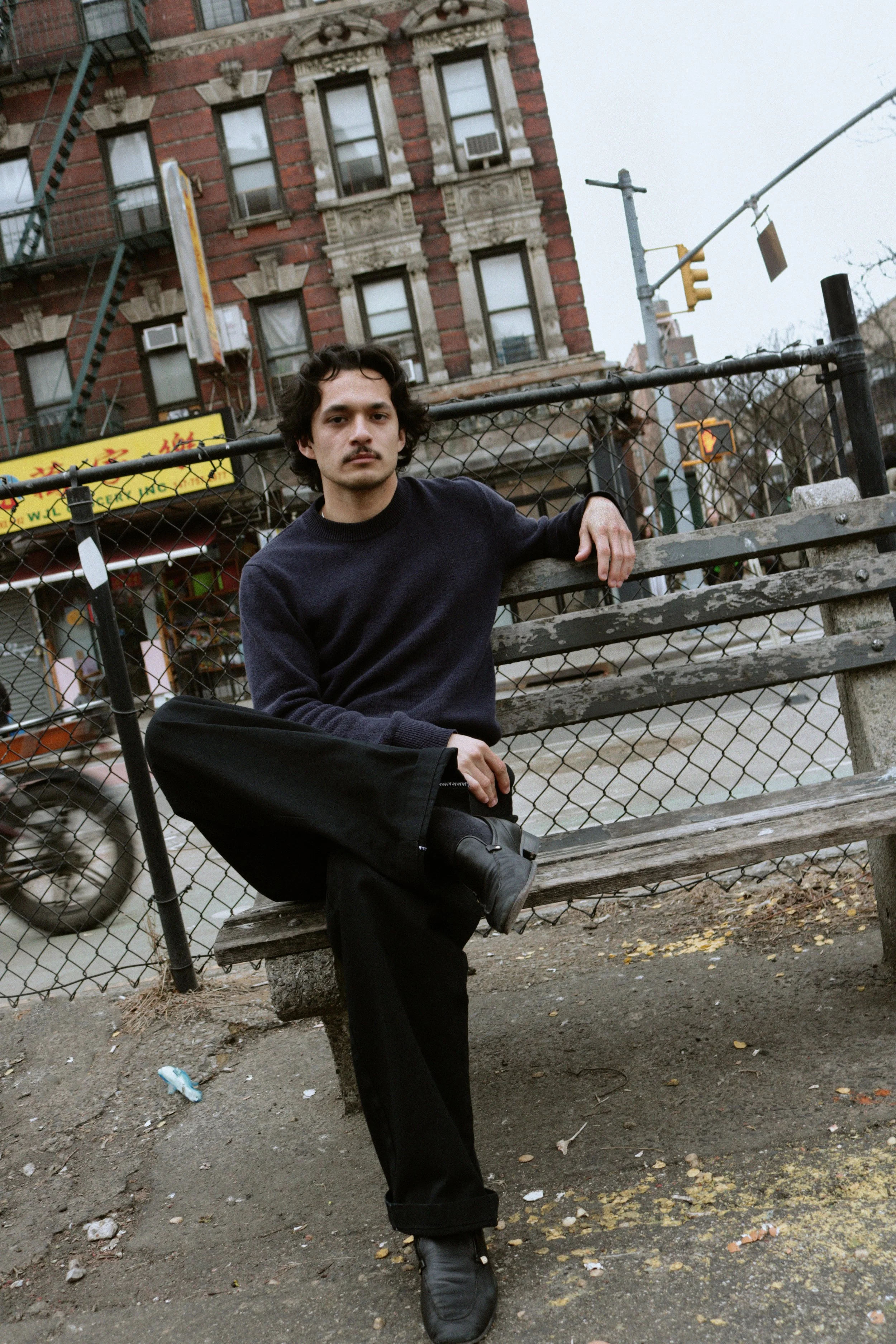
Jesus didn’t always plan on becoming a fashion designer, but style and self-presentation have long shaped the way he understands the world around him. Raised between Southern California and the cultural influence of his Mexican heritage, the FIT graduate and current member of Willy Chavarria’s team approaches design through emotion, memory, and craftsmanship. Drawing inspiration from Chicano culture and family, his work carries a quiet sense of care and intentionality. In conversation with Fifi, our Editorial Director, Jesus reflects on learning how to define himself beyond other people’s expectations.
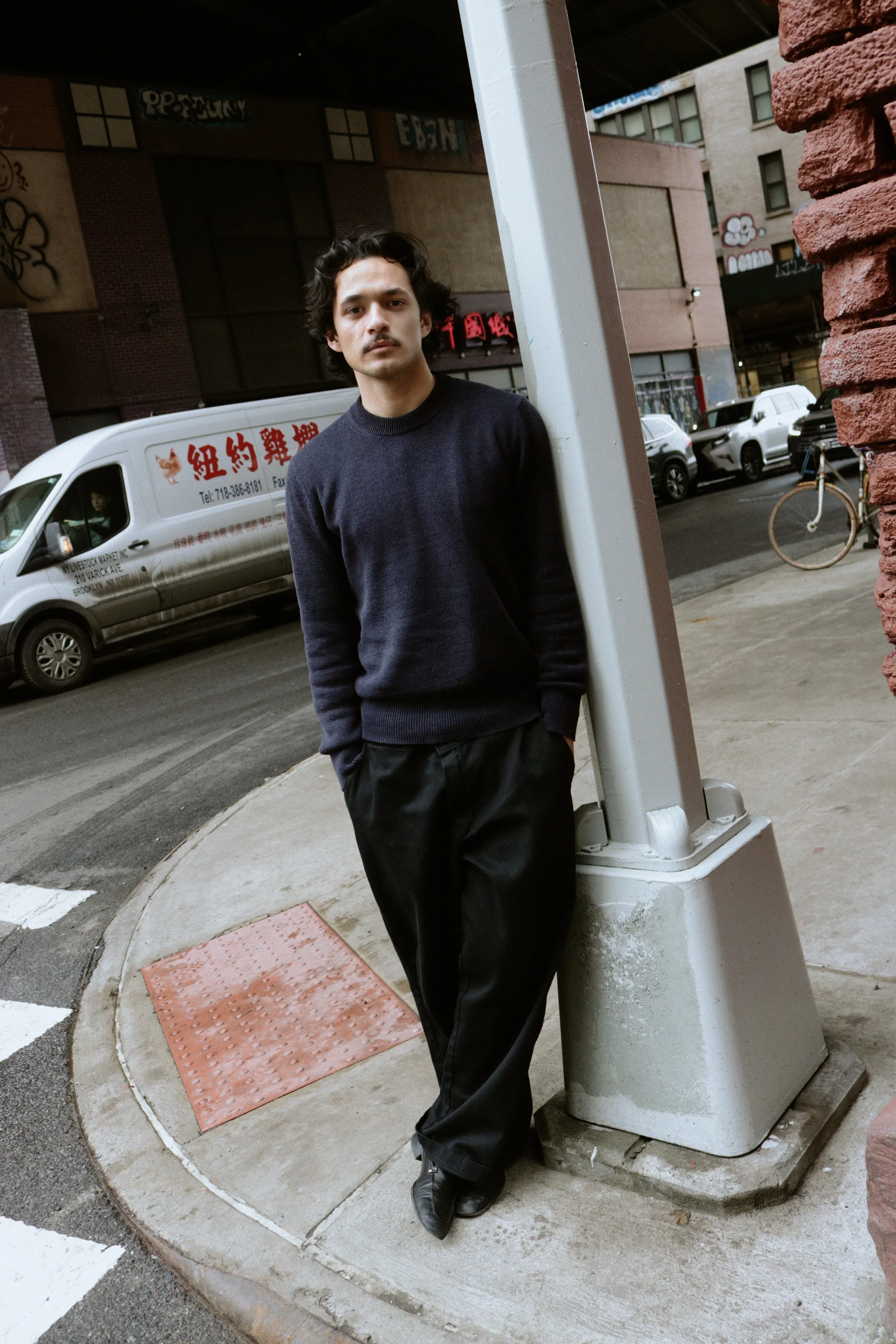
Josefina (Fifi): Where are you from? What’s your background?
Jesus: So, my grandparents are Mexican. On my dad’s side, his dad is from Chihuahua, and on my mom’s side, her dad is from Nayarit. They moved to Southern California sometime in the ’40s.
My dad grew up in San Diego, and my mom was born in Riverside—about an hour from LA—before moving to San Diego. That’s where they met. Then, my dad went on a work trip to Georgia, and my mom drove across the country to be there with him. I ended up being born there, but I grew up in San Diego.
F: A Georgia peach! How did you end up in New York?
J: During COVID, I started looking into fashion schools after going to community college. I ended up attending the Savannah College of Art and Design. Beautiful school, but it just wasn’t the vibe for me. It felt really far removed from everything, and while they’re connected, a lot of people still move to New York afterward and struggle to find opportunities.
After about ten months there, I realized I wasn’t enjoying it, so I looked into the Fashion Institute of Technology. I applied to the one-year program, got in, and literally the week before classes started at SCAD, I dropped everything. I went back to California for the summer and then moved to New York to start at FIT in August 2022.
F: How did you get into fashion design?
J: When I was younger, I never actually had an interest in making clothes specifically. I just loved dressing up and presenting myself well. I never had a super extravagant style, but I cared a lot about presentation and how clothes made me feel. My grandparents owned an upholstery shop, so I grew up around sewing and craftsmanship. I understood what it took to make things well.
Before graduating from high school, I actually wanted to be an architect. I loved the idea of designing structures, but architecture felt less immediate. It takes years to realize a project; there are licenses, codes, regulations…so many barriers. With fashion, if I want to make something, I can make it now.
At community college, I started taking design classes and eventually a sewing class where we made really basic garments—shirts, skirts, things like that. But I loved that you could take any fabric and turn it into whatever you wanted. There are rules, but once you understand them, you can break them. I think what really drew me in was the idea of making people feel good in what they wear.
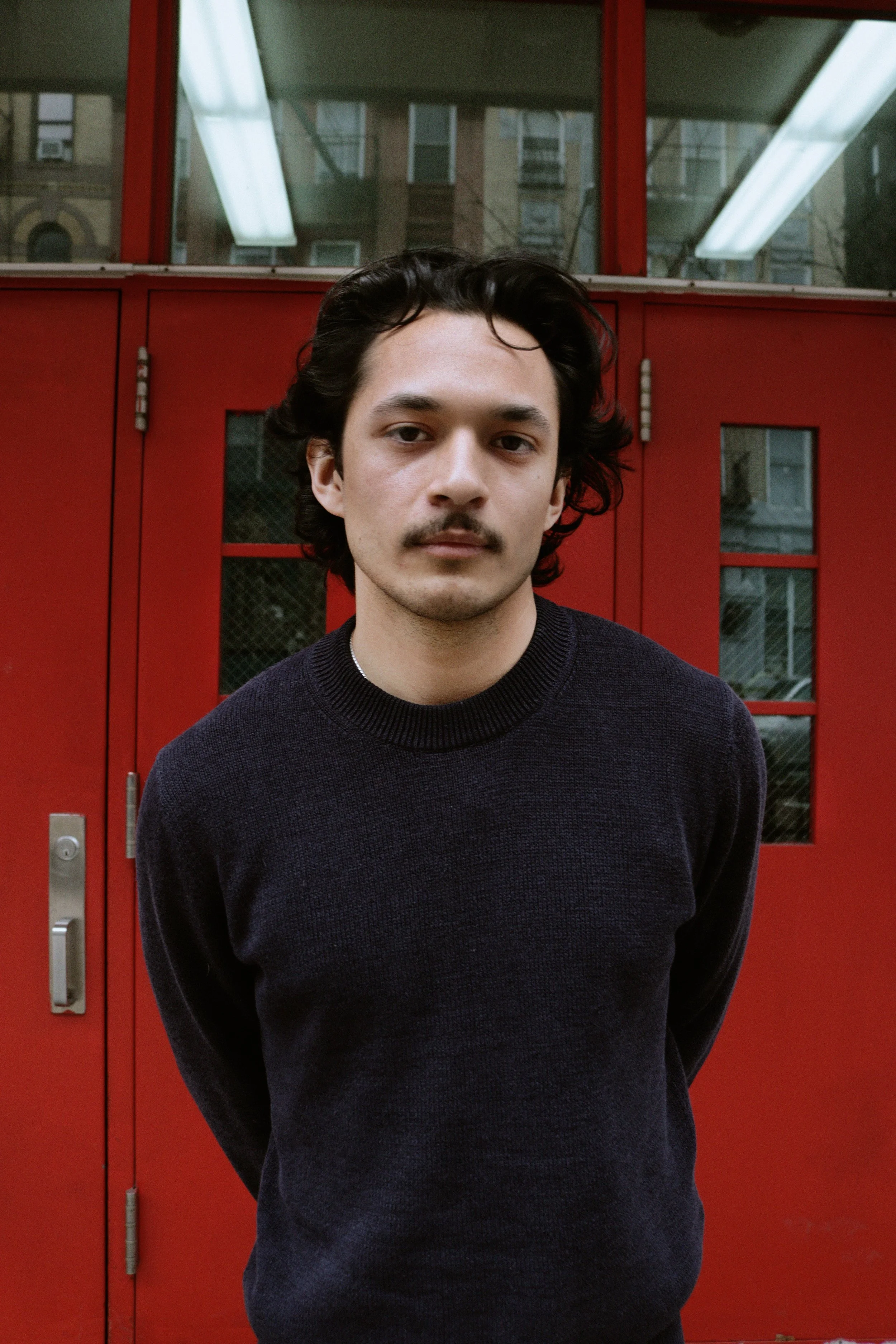
F: What does “presenting yourself well” mean to you?
J: It’s different for everyone, but for me, I like presenting myself as calm. My wardrobe is mostly blacks, browns, dark reds, and very muted tones. I don’t stray too far from that palette. Styling-wise, I like subtlety. I want it to look like I put effort into an outfit, but not in a way that screams for attention.
F: How did working with Willy Chavarria happen?
J: I actually reached out to him on LinkedIn. I think timing played a huge role, but also the way I approached him. I explained my skill set, but more importantly, I talked about how the brand personally related to me. A lot of what he was designing reminded me of what my uncles and my dad wore in the ’90s, so I understood the language of the brand in a genuine way.
This was around January 2023, after one of his shows. He invited me into the studio, but at the time, I already had another internship, and FIT wouldn’t allow me to do both. So I stayed where I was and figured maybe something would happen in the future.
I was interning at a bespoke tailoring atelier in Brooklyn called Teeth and Bur, on Scott Avenue near Metropolitan. It was this tiny, intimate studio hidden inside a warehouse building. That’s where I learned how to make jackets and really beautiful blazers.
I’m glad I stayed there because I learned so much in those extra few months. Then, after I finished my one-year program and got my associate’s degree, Willy’s assistant reached back out and asked if I was still looking for an internship. I immediately said yes.
I put in my two weeks at the other internship and started working with Willy. Around the same time, I barely got into the required internship class; I was literally on the phone begging for the counselor to override it for me, minutes before they closed for the weekend. Everything somehow worked out. Then, on the day I started, Willy’s assistant resigned. Suddenly, there was an opening, and within about a month of working there, I became full-time. Everything felt strangely meant to be.
F: What do you think made you stand out to him?
J: There was a lot of synergy from the beginning. One thing that stood out was that before I was even officially part of the team, I started reorganizing the studio layout. Willy walked in and was like, “What the hell is going on in here?” I think that initiative showed something about how I think and work.
But beyond that, I always tell this story about being in Savannah before I moved to New York. I was sitting outside my girlfriend’s apartment talking about what we wanted for ourselves, and one of my biggest goals was to work with Willy someday.
I think it’s important not only to imagine yourself somewhere, but to prepare yourself for it. Being in New York, attending FIT, developing a real skill set…that preparation mattered.
A lot of people want to work for brands they admire, but the real question is: What are you bringing to the table that can actually help elevate the brand?
F: What drew you to Willy’s work specifically?
J: The obvious answer is the Chicano influence and cultural representation, but over time, I realized the most meaningful part of working with him is his ability to represent very real emotions and real people.
A lot of brands build worlds around models. Willy sees real people who already exist in the world and builds from there. That completely changed the way I think about design. He’s shown me that being a designer at that level means doing more than just making clothes. It’s about representation, community, and giving back quietly, without making it performative. That’s what makes it meaningful.
F: What’s something you want people to know?
J: Recently, I’ve been trying to learn how to actually love myself.
I think so much of our lives are shaped by worrying about other people’s perceptions of us. You end up making decisions based on how other people might react instead of honoring how you actually feel.
I’m finally getting to a point where I can trust my own feelings, make decisions from that place, and let people interpret them however they want. As long as I know what something means to me, that’s enough.
F: What’s your go-to coffee order?
J: I used to drink matcha all the time. There’s this place in Greenpoint called Rhythm Zero that once suggested adding brown sugar to my matcha, and it changed everything. But eventually I realized matcha was making me exhausted, probably because I already have low iron. So now I mostly drink hot Americanos, even in the summer.
F: Favorite magazine?
J: Honestly, I don’t pay attention to them that much anymore, but I really love Dutch Magazine. The imagery is beautiful, especially the work from the ’90s and early 2000s. I recently visited an archive in New York with the team and got to look through old issues. The visuals were incredible.
F: Favorite era aesthetically—’70s, ’80s, or ’90s?
J: Probably the ’80s. During COVID, I spent an entire summer trying to learn how to play “Since I’ve Been Loving You” by Led Zeppelin on guitar. I used to play a lot more than I do now.
F: Man, I love Led Zeppelin. Thank you so much for your time, Jesus!
Interested in being featured? Email us at 2latemag@gmail.com!
