Is Surveillance Chic? Kylie Jenner seems to think so.
Text by Maya Davila
In late June, Meta partnered with controversial TV personality and cosmetics mogul Kylie Jenner to launch ‘smart’ glasses that contain software that easily captures photos and video without people’s knowledge. These glasses can also allow the user to listen to music, take calls, and interact with Meta AI at just the command of your voice. Starting at the low price of $399, you can have Kylie Jenner’s chatbot speak to you through a pair of lenses (riseee and shineee). Despite being marketed as ‘designed for privacy, controlled by you,’ history seems to show otherwise.
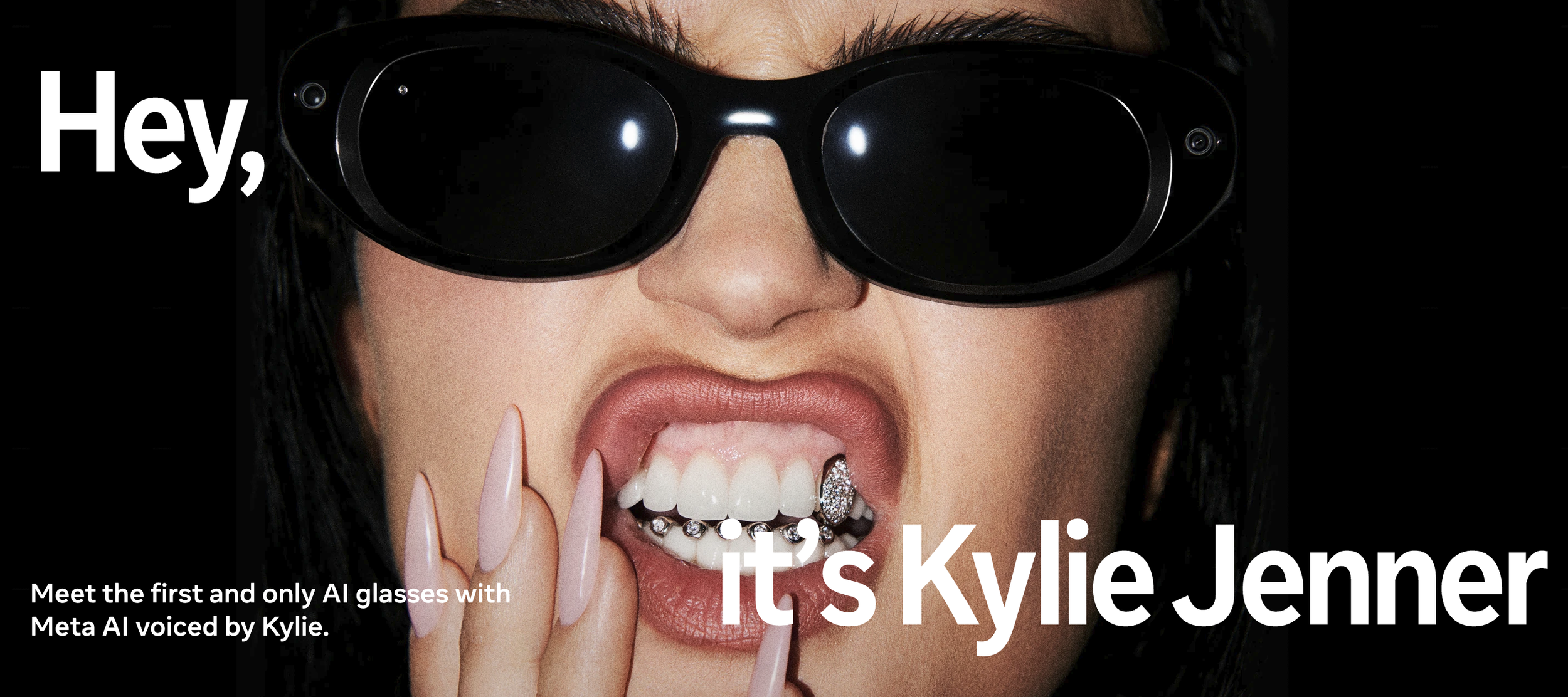
There is increased normalization in recording others without their knowledge. Presence doesn’t automatically equate to consent; just see it from countless women on Instagram who are unknowingly involved in street interviews. On nearly every social platform, there are countless ‘manfluencers’ who film themselves attempting to pick up women, with hidden video and audio in their glasses that bypass asking for permission to record.
It’s not hyperbolic to believe that these glasses will continue to violate basic privacy rights, as AI is notorious for doing, but this will also undoubtedly continue to harm women and children. With this knowledge in mind, what is most frustrating—and frankly, disturbing as well—is seeing fellow creatives and even people that I have worked with promote the latest Meta glasses, including influencers such as Coco Schiffer and Corinne Collado. With celebrities and public figures manufacturing mass surveillance and AI in the name of ‘fashion,’ where does one draw the line when the lack of privacy in public and intimate spaces collapses?

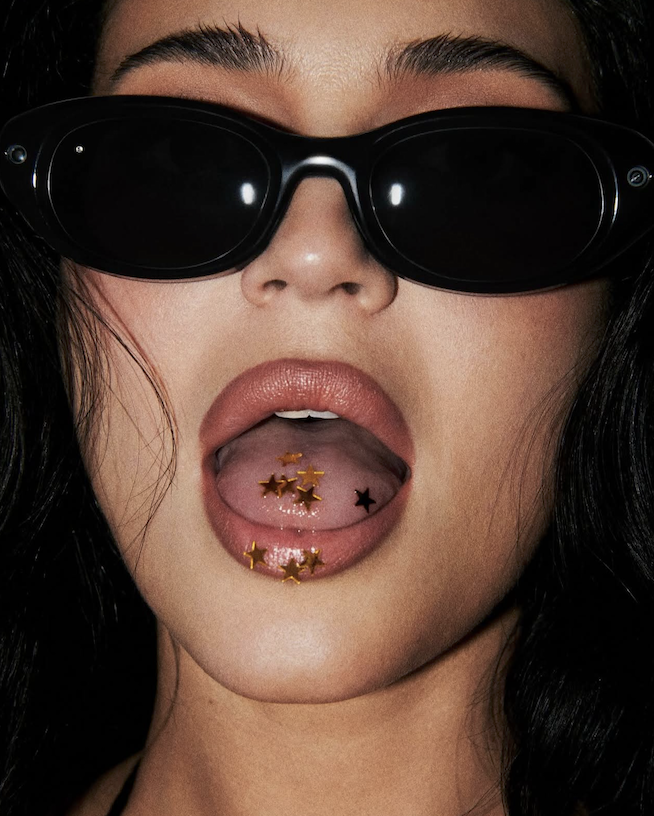
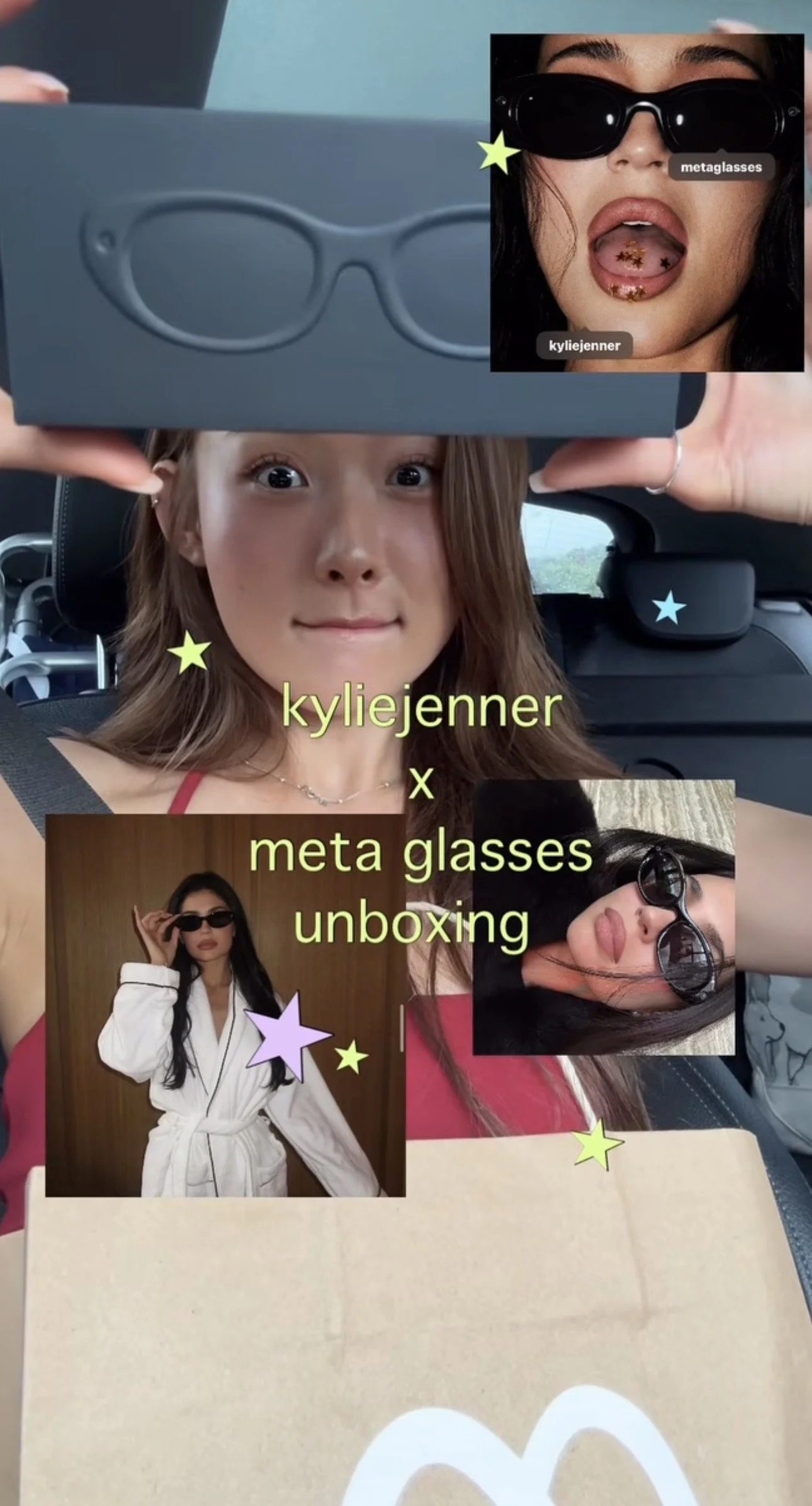
By now, you’ve probably seen discourse across social platforms; some individuals are fully embracing ‘the future of fashion,’ while others remain hesitant and protest against the rise of a dystopian future being shaped by billionaires. Earlier this month, class-based activism group Everyone Hates Elon (EHE) visualized the concerns that this collaboration raises in a spoof ad that flips between a marketing photo of Jenner wearing a pair of Meta glasses and a black-and-white image showing a skeletal, X-ray version of her, with the tagline, “We’re always watching.”
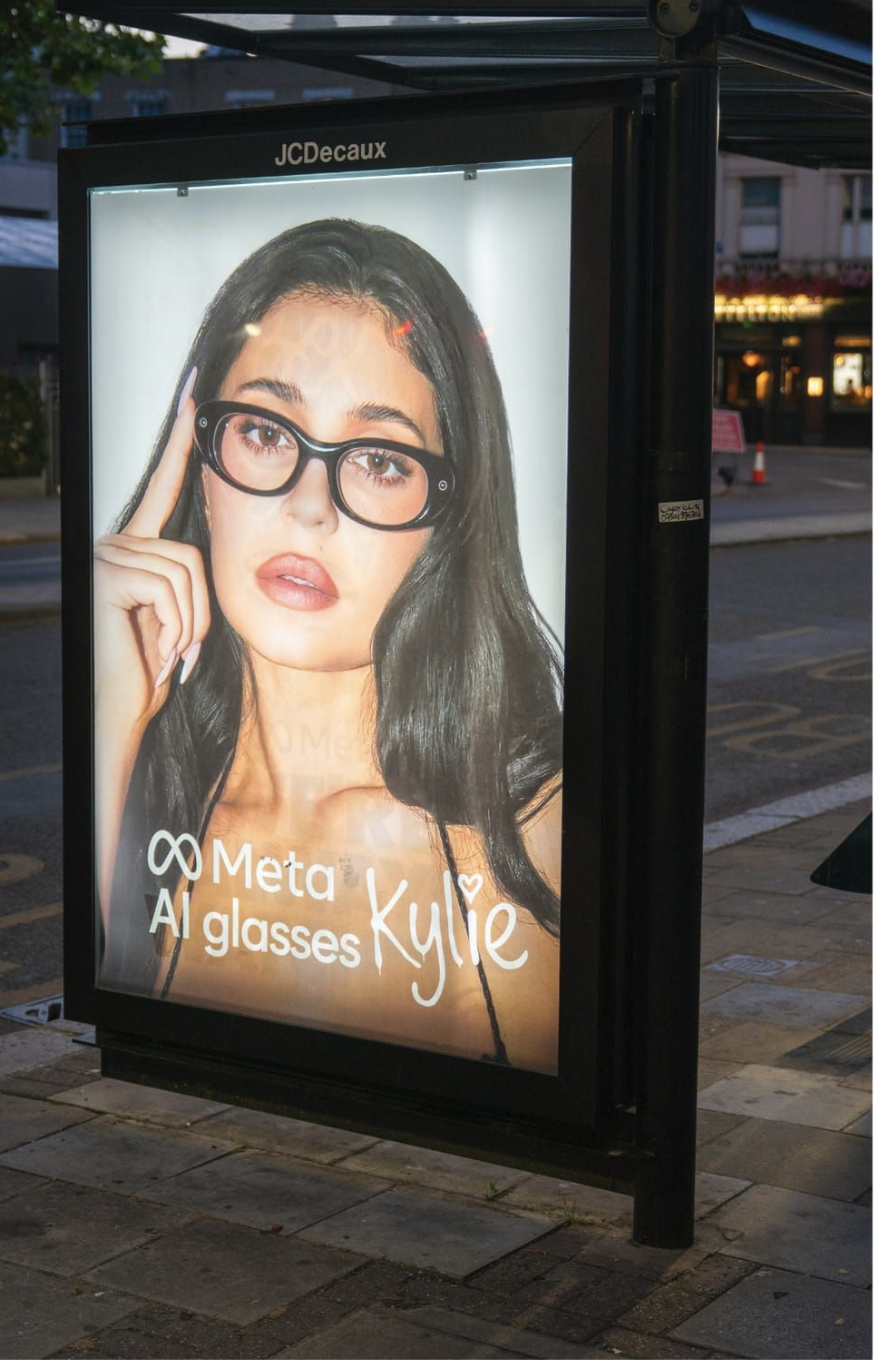

Based on the sci-fi film They Live (1988), the ad references the main character encountering a pair of sunglasses that expose the extractive messaging of advertisements, revealing how they are ‘subliminally’ controlling humanity. In the movie, humans are being controlled/exploited by a secret population of aliens posing as people.

Back in September 2023, Meta unveiled their AI-enabled ‘smart’ glasses with Ray-Bans, with advertisements and campaigns largely promoted to the male demographic. One of the most notorious commercials was aired during one of television’s most-tuned-in nights: the Super Bowl, with stars Chris Hemsworth and Chris Pratt being the face of this 2025 campaign. With Kris Jenner starring alongside them in this infamous commercial, it’s not surprising that the momager landed a deal for her 28-year-old money maker.
Meta’s collaboration with Kylie Jenner is an attempt to draw more women to ‘give in’ to the rise of AI. According to Forbes, women drive 70 to 80% of all consumer purchasing, through a combination of direct purchasing and their influence. And what areas do we consume most in? Beauty and fashion.
The Kardashians are notorious for being one of the wealthiest and most visible families in the world, and most recently, Kylie Jenner appeared on Session 120 of the podcast, Therapuss with Jake Shane, released on May 14th, 2026. She opened up about how violated she felt when paparazzi took photos and videos of her without her consent, yet now she enables the same behavior towards millions of women who do not have the luxury of security as she does.
Who do these frames appeal to? What is the true benefit of violating others for your own pleasure? By manufacturing consent through one of the most recognizable women on the internet, impressionable individuals look at Kylie as someone cool, influencing their choice to perceive smart glasses as ’fashionable;’ it’s marketing surveillance as desirable. Fashion has long shaped what we aspire to own, but it is increasingly shaping what we’re willing to normalize.
While scrolling in TikTok and Instagram comment sections regarding this discourse of this drop, I saw many users recommending an app called “Nearby Glasses,” a software that searches for smart glasses nearby and notifies you of their presence. From what I can deduce, its main downside is that you cannot have the app run in the background, meaning it needs to be opened on your phone in order to scan your surroundings. The irony is difficult to ignore…consumers now have to rely on technology to protect themselves from other consumer technology.
Perhaps this is the clearest indication that something is wrong with our society at large. That’s why media literacy matters as much as digital literacy; every purchase is also an endorsement of the values a product represents. We should ask ourselves who benefits from wearable surveillance, and who bears the cost. Spyware will never be in fashion as long as we continue to fight for privacy.
