Text by Rosari
You’re not lazy, you’re just a coward!
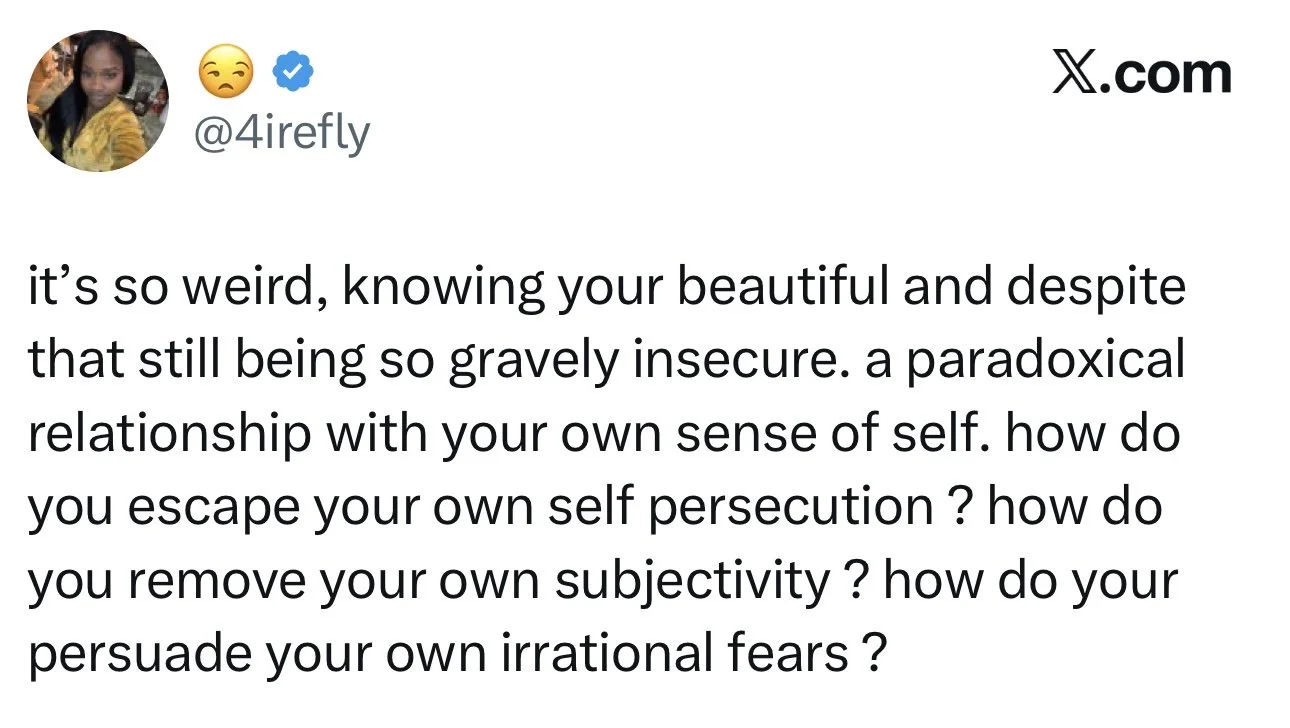
What’s stopping you from posting more, confessing your feelings, or applying to your dream job? Nowadays, insecurity has been marked as a dead-end road rather than a slow car to overtake. Most of us have the privilege to set ourselves up for greatness, yet the thought of failure and warranting judgment from others outweighs the chance of success. Whether it’s financial, aesthetic, relationship, intelligence, or social insecurity, we equally depend on—and resent—others for fulfillment, or lack thereof.
THE CAUSE
Insecurity can stem from experiences as far back as childhood. Parents vocalizing unwarranted comments on your tween appearance, financial comparisons with other kids who have nicer things, or being cheated on by a lousy high school ex; we condition ourselves to prepare for the worst or face potentially familiar problems.
A survey conducted by the Journal of Pediatric Health Care (Swenson et al.) found that “the parents in this sample criticized their children nearly three times more frequently than they praised them.” The American Psychological Association can verify that “Young people internalize those expectations and depend on them for their self-esteem. And when they fail to meet them, as they invariably will, they’ll be critical of themselves for not matching up. To compensate, they strive to be perfect,” when talking about parents’ expectations and perfectionism.
We tie ourselves to the identity created in our early stages of life before we discover and establish our sense of self. Shedding the image people have of you is a test of authenticity, and doubting yourself while proving them wrong can fumble the process.
In the digital age, our online persona is automatically categorized based on followers/following, posts, and engagement with interests. It’s easy to be discouraged when you have access to all trends, subcultures, people, and current events happening simultaneously, and they have access to you. The fear of being perceived is inevitable, and limiting our presence still creates a perception we can’t control.
With the unrelenting growth of online sharing, it’s quick to connect with—or criticize—others behind a screen. Celebrity gossip and records of public drama have been used as lessons to learn from, so we should know better by now, right?
Everybody acts self-righteous but fails to contribute something meaningful or make the change they want to see. Instead, we like to punish and humiliate those who make themselves look “dumb” on the internet (I believe in publicly shaming criminals, especially when the justice system fails to protect and serve victims of the crimes). But we highlight and treat flaws or mistakes of public figures as controversy, which takes away from major issues that can be prevented or solved. Taking accountability is not enough. There’s no grace for people to make mistakes, but enough space to turn them into memes. While some speak up for themselves, most stay silent to prevent any backlash. We invalidate opinions and personal experiences because it wasn’t our own, it wasn’t plausible. Is it so hard to believe that growth in others is possible because we haven’t seen it in ourselves?
THE DAMAGE
Insecurity can take control of the narrative of a person or a collective; the emotional buildup and environmental delays can ultimately change the trajectory of your life if not handled with care.
For the individual stuck in their own head, false scenarios ruminate in their mind. Though rumination isn’t a mental illness, it is a stress-induced response that can be a sign of an underlying mental condition. Rumination encourages doubt, isolation, and anxiety, which keep an individual from seeking new approaches to problems and assumes rejection. That heavy thought process can integrate into one’s daily routine, and the insecurity will make you self-sabotage. The regret of not doing more will sting more than wishing you would’ve done things differently.
For dynamics with highly insecure individuals, their insecurity will plague others over time. In the beginning, passive aggression, resentment, and/or projection occur. “Low self-esteem,” “Relationship conflicts including jealousy, possessiveness, tension, divorce, or separations,” “Dominance and control of the relationship by one partner over the other,” and many other characteristics are listed by the CDC as risk factors for their Intimate Partner Violence Prevention campaign. Insecurity can convert into concerning behavior.
Insecurity and narcissism intertwine as both seek external validation for fulfillment while masking an inferiority complex. Both hold control over their behavior and calculate their actions to get their way. Caroline from the National Domestic Violence Hotline highlights that narcissistic partners “choose to limit how far the abuse goes and when it happens, only behave abusively toward their partner, and let their behavior escalate.. To the extreme, a highly insecure person will publicly humiliate, sabotage, or even abuse their counterparts. thehotline.org also states that “nearly half of all women (48.4%) and men (48.8%) in the United States experience psychological aggression by an intimate partner in their lifetime.” Insecurity can weaken trust, support, and connection through fear-related selfishness, while narcissism weakens them through power-balance scheming.
For those on the receiving end, they are manipulated into thinking that enduring and relieving their [initial person’s] insecurities will build a stronger bond between them. In reality, they’re stuck in a toxic, transactional cycle. They’ll isolate themselves so people on the outside won’t judge or bear the hurt they’re going through. Insecurity is shared and all-consuming to the point that there is no escape. Everyone has baggage, but it’s not your obligation to carry it all.
THE “HEALING”
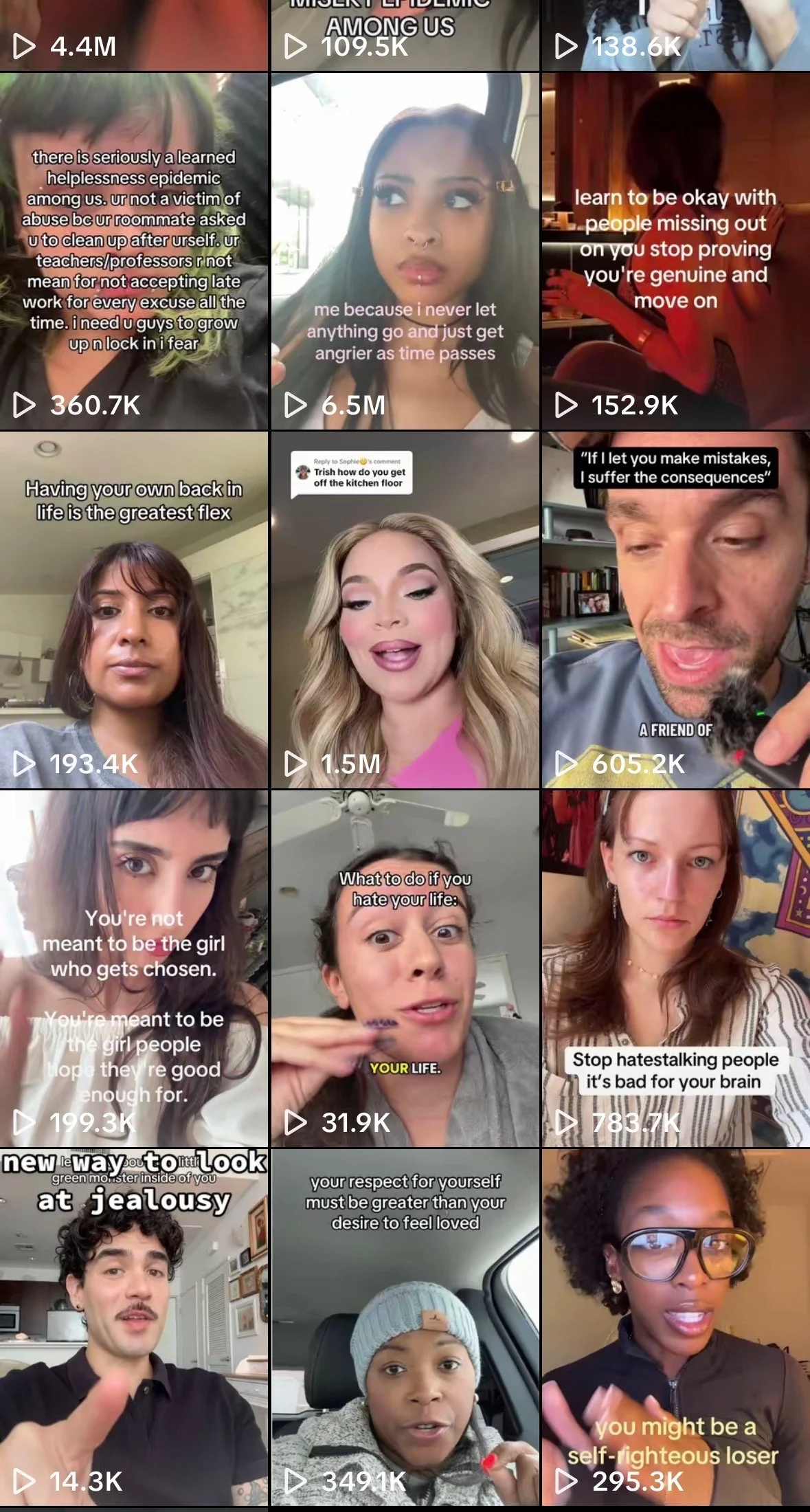
Easier said than done when it comes to healing; it’s simple to envision the version of ourselves that reaches a more fulfilled state than putting in the work to get there. In my opinion, the change for normalcy is a stronger battle than the struggle to let go. “Healing” in the digital world is an edited report of vulnerability; we’re only shown what they want to know in a 60-second video. Though healing does take effort and patience, smaller steps could help you learn more about yourself in the process:
Overcoming your own stubbornness: Limiting beliefs are the first lock on the door.
“When I’m skinnier I’ll start…”
“If I had someone to go with, maybe…”
“I’m not good enough…”
STOP IT! It’s okay to sit and settle with what you learn about yourself, to accept your flaws and limitations, but would you let that conclude your journey to a new version of you? Learning about your triggers and what causes them, finding short-term and long-term solutions, and setting goals for yourself can take you a long way.
Do not answer for other people when you haven’t yet asked the question. We always assume rejection or denial; there’s nothing to lose when you ask! Loss and rejection don’t determine your value; they clarify your gratitude and options.
Tapping into your self-control: With the world going to shit, being there for yourself is all you can do. Some situations we are put in don’t allow us to have a choice or make a preventative change, but how you react and move forward is the freedom you create from it. We impulsively speak and act for what we think is right in the moment and consider every possible outcome, but oftentimes we create more mistakes that set us back. Regulating emotions and letting them pass may be the solution for the time being, and redirecting your focus into helping yourself can filter answers along the way. In the meantime, creating a routine and environment full of fulfilling activities makes the days go by faster.
You’re not going to be everyone’s favorite person! Personally, I keep in mind that my interactions with strangers, friends, family, and colleagues are different day to day. I can be rude to someone for a one-and-done interaction, and I can be a best friend to someone in need. I do not let these few moments control who I am overall.
Literally, shut the fuck up: Aside from seeking help, the more you speak of your insecurities— whether it’s self-deprecating jokes or criticism projected onto others—the more it is used against you. You don’t have to believe in the “speak it into existence” mindset to see that you’re continuously affirming these negative thoughts. Soon you’ll project it onto your loved ones. Sometimes no one will know your insecurities at first glance, so why give them the chance to know? It’s good to have your wins as your own too; what they don’t know, they cannot ruin.
Be spontaneous: The art of doing: Book that dance class, ceramics workshop, or therapy session! Get that yearly check-up at the doctor’s office! Clean your space and treat yourself to that new ice cream shop you wanted! No one’s going to reward you for waiting around; better to learn you’re good or bad at something, or if something you thought you’d like is not for you sooner. Take initiative!
MY SEND OFF
I’ve had my own battles with insecurity; I was even insecure about writing and publishing this essay. I struggle with my words terribly, but I’m glad to write about it online rather than to stutter it out in person.
My biggest insecurities growing up came from a body-conscious immigrant family, past strictly transactional “friendships,” and—ONLY TWO—bum-ass, loser EX-boyfriends. I fear ending up like my mother. I think the love and effort I put into my current platonic relationships will not be reciprocated. I’m scared to pursue any higher artistic positions because I don’t acquire many field-related skills. I don’t want to be in relationships because I’m scared to be part of a fetish or experiment again. The past two years of being alone, out of school with no full-time corporate job, and surrounding myself with the right people have allowed me to face my flaws head-on, teach myself new things, and confront my past.

I stopped seeing my friends as competition and started giving the support they deserve. I take accountability for being avoidant in my relationships. I no longer center the search for romantic relationships and leave when I am unwanted. I take myself out on solo dates and trips because I am not waiting for someone to be available. I’ve (slowly) stopped seeking the validation of my parents so I can focus on my physical well-being and doing things that make me happy!
I’ve come to the conclusion that the insecurity of others is not my responsibility. Why should I feel bad for taking advantage of what I have? I know I work hard for what I have, and I’ll keep working to be in greater alignment with myself. If others can’t respect and grow with me, then it's okay that our paths diverge. Their projection is not a reflection of me. I still have insecurities, but I won’t let them dictate who I am.
