HAVE I LOST MY YOUTH?
Text by Maya Davila
Earlier this summer on a particularly sticky day, I had stopped by my brother’s home to visit my niece. My sister-in-law’s sister, Karen* was there with her daughter. As with all awkward, surface-level catch-ups with extended family, she started asking what I’d been up to. I don’t think I’ve held a conversation with her longer than 5 minutes before, so I just shared what was top of mind.
I LOST MY JOB. YEAH, I’M O.K. YES, I AM SINGLE AND NOT READY TO MINGLE. YES, I AM LOOKING FOR JOBS. NO, MY MAGAZINE DOESN’T MAKE MONEY.
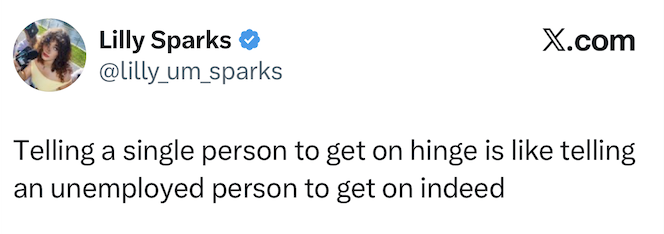
That feeling when you are #both.
This wasn’t quite the life I had imagined for myself post-grad, but I was content, aside from losing my source of income. I had just released 2LATE’s second issue, I regained a love for playing video games, and I was spending more time with friends…some of the things that make a 20-something year-old feel a bit stable (and happy) in her life.
We eventually landed on the topic of writing, and after receiving unsolicited advice on how I should dropship AI-generated children’s books on Amazon, Karen suggested I talk to my friends about how it feels to be getting older.
“You know, you have lost your youth. After all, you’ve graduated, and you’ve already had your first full-time job…”
My eyebrows instinctively warped, my face coiling in confusion. Oh! Not only was I receiving unsolicited advice on how to navigate my future, but now I have apparently ‘lost my youth…’ After my initial shock wore off, I brashly replied, “Youth is simply a mindset!”
Among women of all ages, time is treated as the greatest threat of all. There is a deeply ingrained fear of aging in our society: we have only so many years to take advantage of our ‘prime’ (which apparently, for me, has already ended), and many women put a vast amount of energy into preventing it. But if youth is only seen as a mindset, then why do we care so much about looking young? But then if it’s only physical, why do women 2 decades my senior seem more energetic and comfortable in their skin than those half their age? And if we define youth by milestones, then why did losing my job feel like I regressed? (I was told I had no aesthetic or taste). This was a lot to unpack.
So after parting ways, I couldn’t help but wonder…have I lost my youth?
If I were to take Karen’s definition and apply it to those my age, our youth has been disappearing one achievement at a time…but my accomplishments have never made me feel ‘old.’ If anything, I feel like only recently I’ve started living. After all, I’m only 24, and I honestly have zero clue what I’ll be doing for the remainder of my years; this simultaneously scares and excites me.
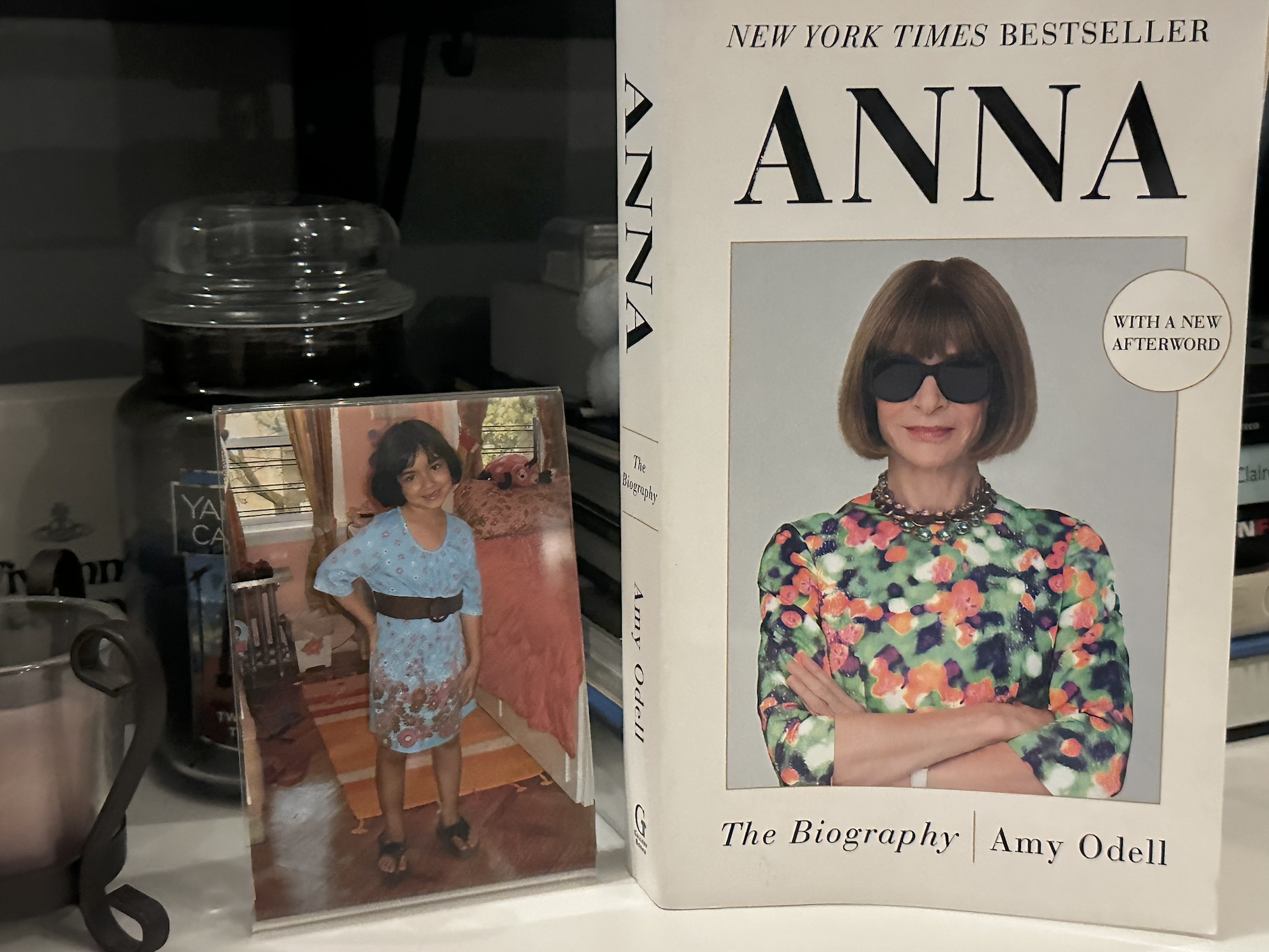
I think I’ve laid out a million road maps and created an infinite amount of vision boards as to what I thought my life would look like, but there is still so much left to pursue. I want to meet new people, I want that dream job (I see you, Condé Nast), and I want to travel the world. I’ll spend an entire afternoon being glued to Roblox, then stay up until 2 a.m. editing articles for 2LATE. I can worry about how I will pay my student loans one second and then text my friends a video of Dylan Scott Kevitch saying, “Just shut the fuck up, and fuck me,” the next. Nothing is linear, and adulthood hasn’t erased the parts of me that I associate with youth; I’m simply co-existing with more experience that further cements my needs and desires.
Maybe that’s where we, as women, have made the mistake of trying to cage being ‘young’ and being an ‘adult’ into opposites—when in reality the lines blur as time goes on. As a girl, I’ve always been told that I’ve been mature beyond my years, and now that I’ve become a marginally functional adult, that concern disguised as a compliment rarely comes my way. Perhaps being emotionally self-aware since I was 10 has shaped me to be this way; I realized that the pressure to ‘act grown’ but also preserve whatever physical markers of youth that one might have is rooted in a deep misogyny. So yes, you can embrace every stage of womanhood as long as you don’t look too old doing so. Every decision is scrutinized under this lens.
It’s most noticeable working in the fashion industry; you are constantly exposed to how the beauty world has made a billion-dollar economy out of this contradiction. Fillers, Botox, facelifts, supplements, anti-aging creams, laser treatments—basically anything that promises to reverse or prolong the passage of time is the topic on everyone’s lips. Why is ‘time’ being sold as a problem that needs to be solved? What exactly are we trying to preserve? I found myself asking this long before my conversation with Karen. Is the acceptable way to age to look effortlessly untouched by aging?
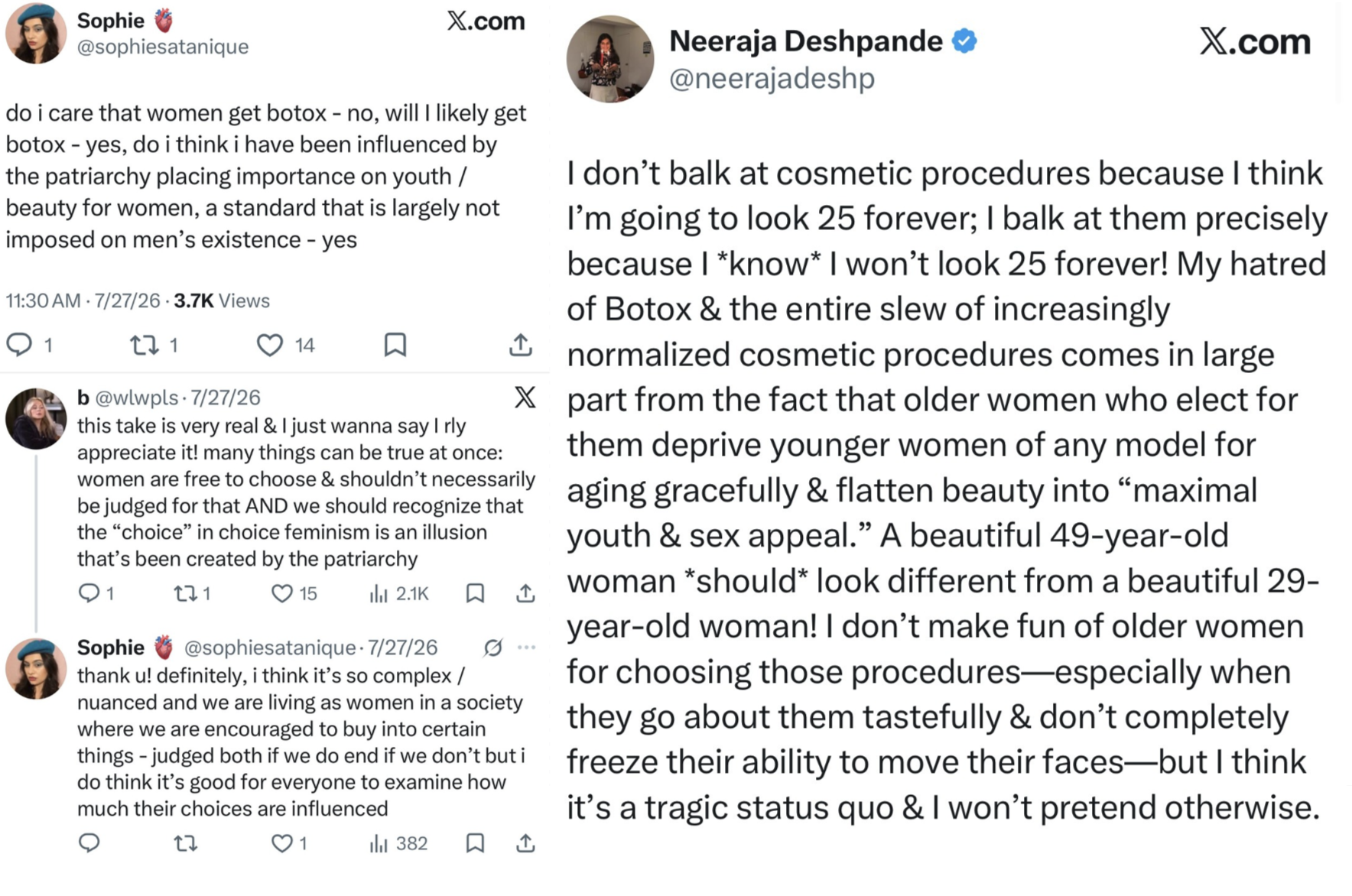
Two sides of the same coin.
The beauty industry has gotten remarkably good at selling this as empowerment: looking younger can bring you confidence. The choice to get preventative Botox or regularly getting filler isn’t inherently wrong or right, and I don’t blame women for getting it done. But how much of a choice is anything when the desire to change ourselves has been shaped by years of being taught what is worth changing in the first place? Say helloooo to our insecurities.
When I was younger, I remember being hyperfixated on the asymmetry in my face (my nose slopes toward the right), and I always wondered if this was something I should change once I came of age. In university, I’ve been asked if I’ve had work done; someone I worked alongside was convinced I had lip fillers and a lip tattoo. At my last job, the girls I worked with outwardly expressed their insecurities and shared what work they’ve had done and what they still want to do. When their eyes fell to me, I felt like Samantha in Season 1, Episode 2 of Sex and the City, when the girls were discussing their insecurities about their bodies and Miss Jones simply declared, “What? I happen to love the way I look.”
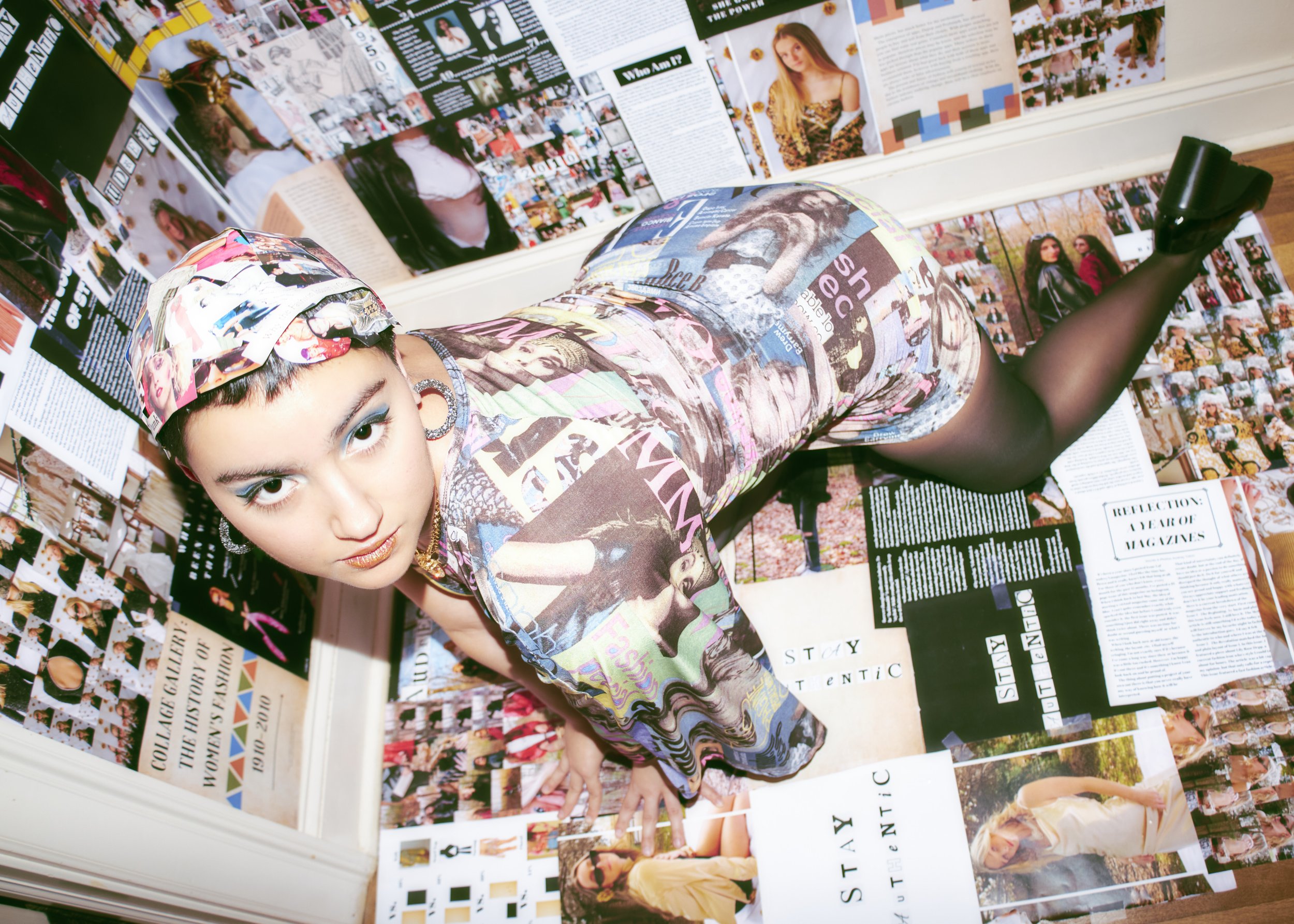
These moments at school and work made me look back to my adolescence; it’s unreal how early on we learn what parts of our face and body can be changed. Now I’m comfortable with how I look and don’t really plan on getting any body modifications other than tattoos, but I also can’t pretend that my own decision exists outside of the same culture that influences the opposite of my choice. Even when a woman says she’s doing it for herself, what she wants doesn’t develop in a vacuum.
I don’t want to stay young forever. When I think about who I deem ‘youthful,’ a woman’s age rarely comes into play.
If you know me, I am a huge Madonna fan. That admiration has been passed down from a baby boomer to her Gen Z daughter, and Madonna is who I strive to be when I’m 68. I want to feel as if there is still more life ahead of me. I want to keep discovering new things about myself and continue pursuing the things I love most. To still be capable of surprising myself…to me, that is a life worth living. I just want to be alive and feel alive.
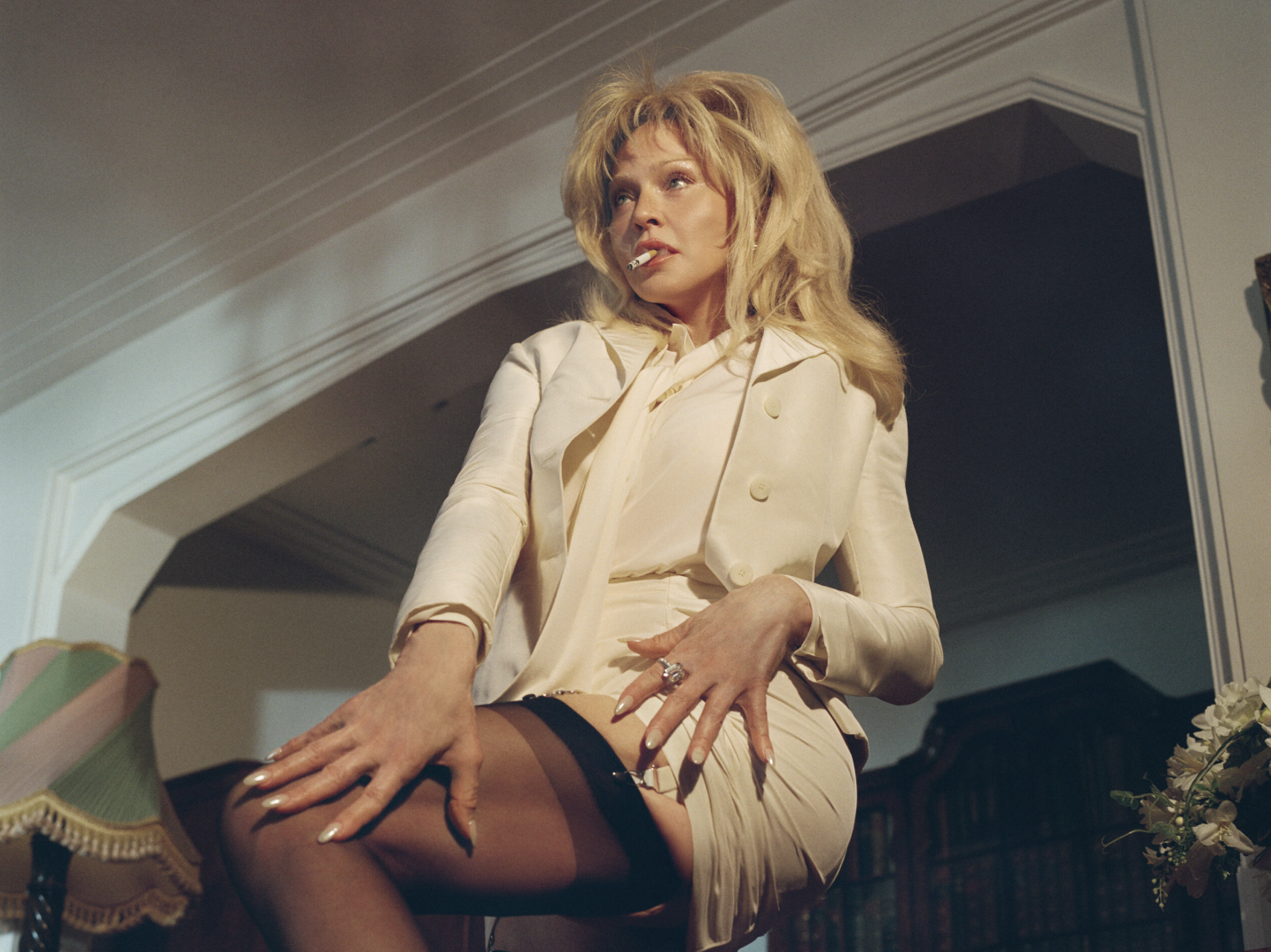
Interview Magazine, June 2026
Like duh, we’re all aging from the moment we’re born. What lingered with me was Karen’s implication that, by getting older, I was somehow losing something. What exactly is lost? My curiosity? Or perhaps a sense of possibility? The ability to start over? (This, I am all too familiar with).
If youth is feeling as if there’s still somewhere left to go, something more to do, then I am nowhere near the end.
