In Conversation With: Brayan Ramales
Interview by Josefina Lopez de Romaña, Coordinated by Adriana Bolaños, Shot by Heather Suarez
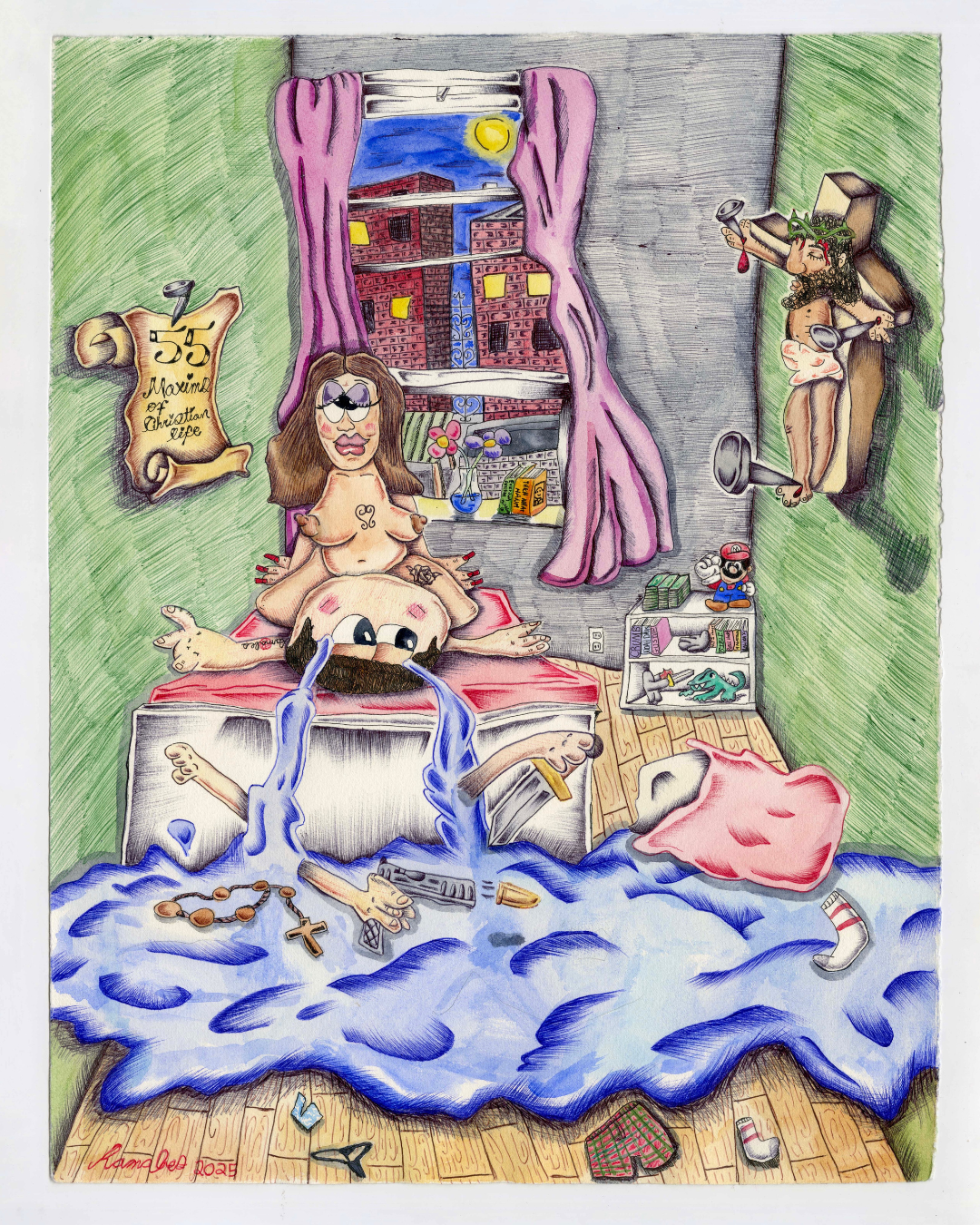
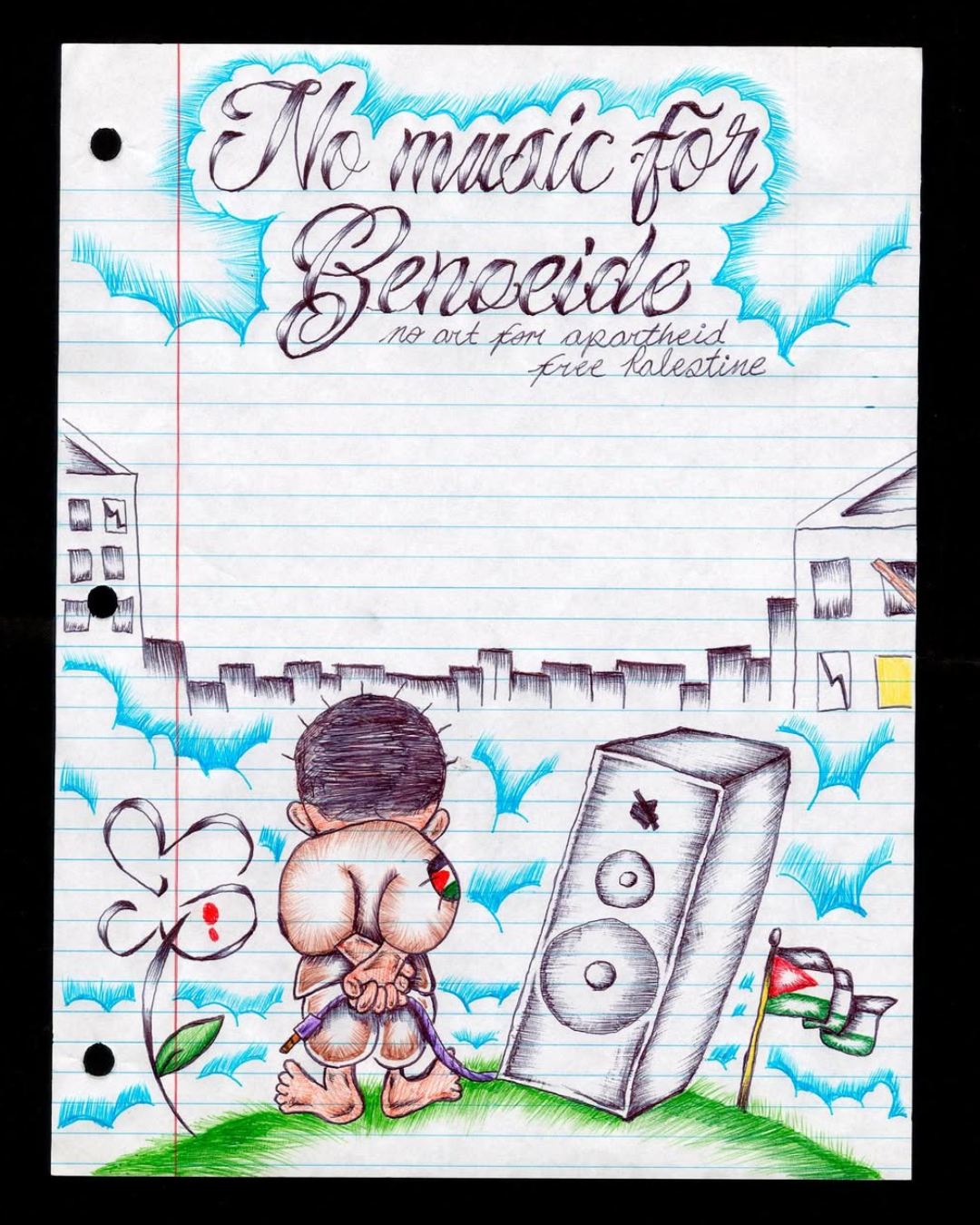
Brayan Ramales will be the first to admit that he was terrible at painting when he started, but quitting was never part of the plan. The Mexican multidisciplinary artist from Kensington, New York, now moves fluidly through different art forms and is most notable for his airbrushing work. Pulling references from Catholic iconography, childhood summers in Mexico, and internet rabbit holes, his work is pieced together by his beautifully chaotic life. In conversation with Fifi, our Editorial Director, Ramales reflects on his path as an artist.
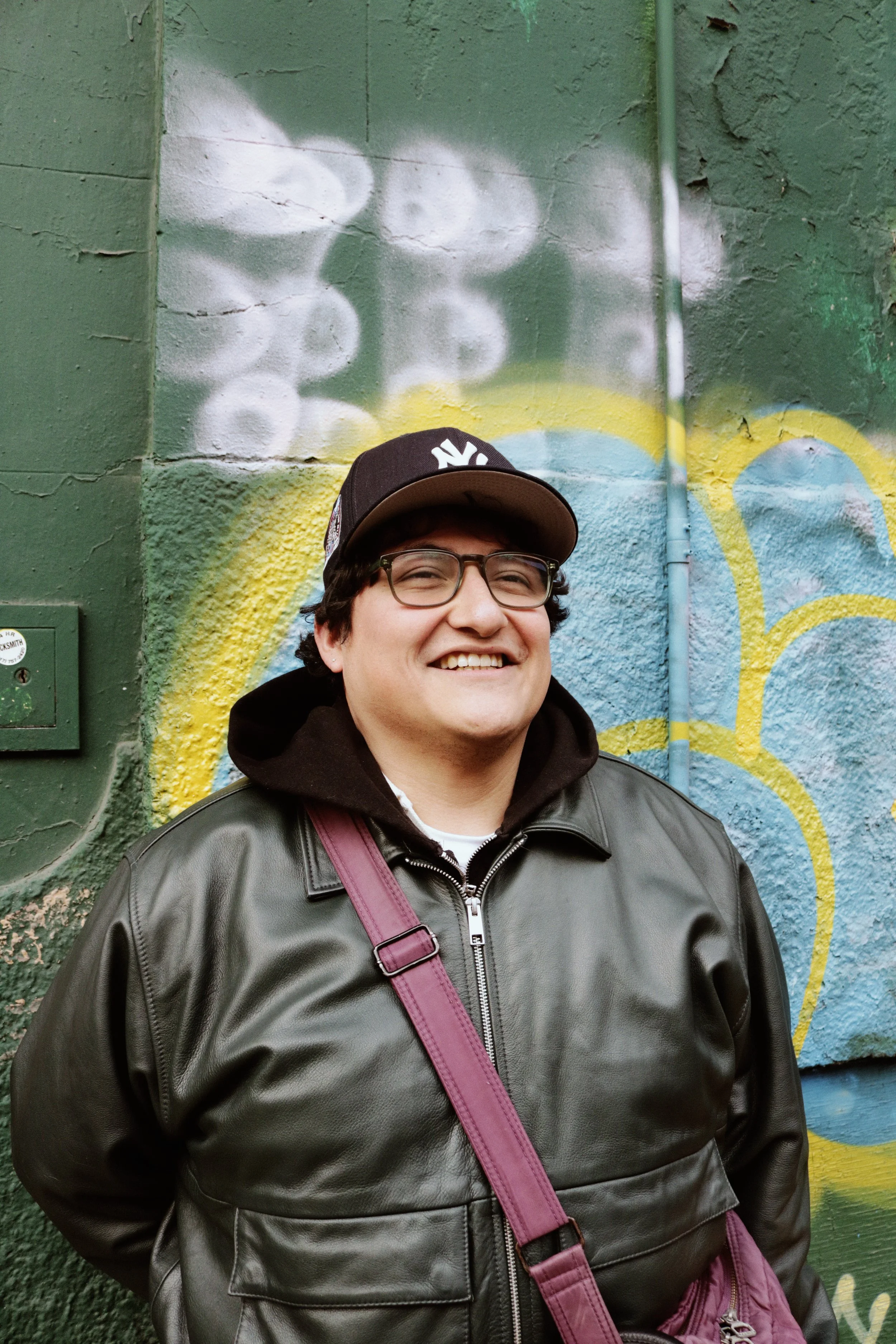
Josefina: I’m so happy to finally get the chance to chat with you! I need to know—when did you start painting?
Brayan: When I was 16. I had a friend also named Brayan. We met in middle school, and he taught me how to paint in high school. Before that, I honestly felt like I was kind of not good at anything my whole life. Painting was, like, the first thing that I was obsessed with. I was really bad at it for a long time.
J: Wait, for real?
B: Yeah, and all my friends were really good at it, and they would lowkey say things about my work, not in a bad way though [laughs]. I don’t know if you have friends who start to make music, and it’s really bad at first.
J: So freaking bad.
Adriana: But I feel like that’s how people get started, you know?
B: Totally. I wasn’t good at this until like five years ago. One of my best friends, William, told me three years in, “You lowkey might have to stop,” but I just didn’t.
J: Thank god! If you are having fun with something, you can’t really give up.
B: I feel like I’ve never really cared about what people thought about me my whole life, and that’s what really kept me going.
J: When was the moment it hit you, when you knew this is what you wanted to do?
B: It really picked up out of nowhere during the pandemic in 2020. I was working at a nonprofit called NICE, which stands for New Immigrant Community Empowerment. It was really fun helping out the community, and because of the pandemic, I had so much time to paint. I was also working from home, so I would paint a lot. Then one of my friends, Mike, who makes music, hired me to do some merch for him…and I think from thereon out I was like, dang, I want to do this full-time.
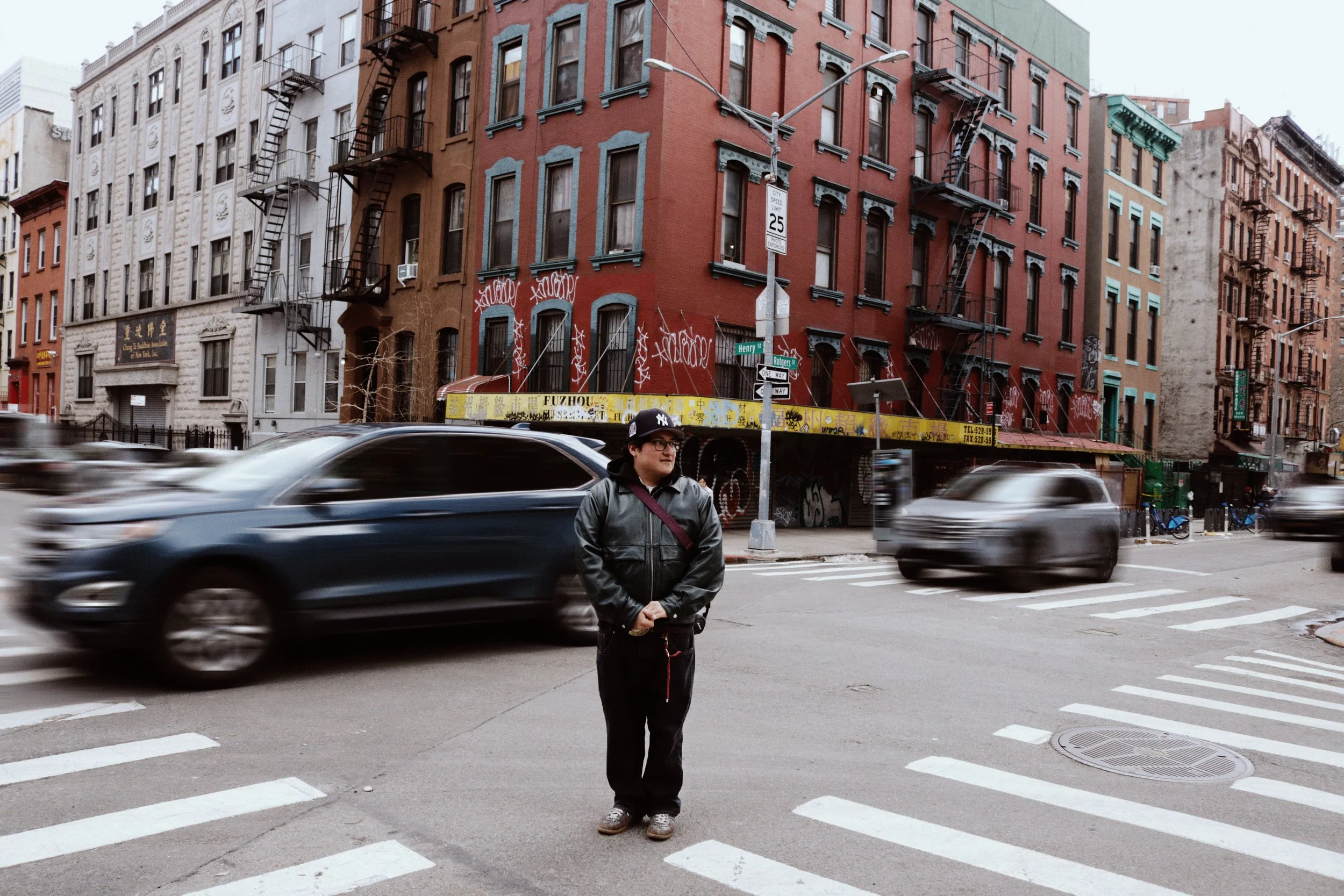
J: I truly love your work. I talk about it all the time, it’s just so unique the way you are able to transmit these ideas through your art and how it relates back to your culture. Especially its relationship with Catholic figures, as I also grew up in a very Catholic environment, I wanted to know more about your inspiration behind that.
B: My mom would send me to Mexico in the summer when I was growing up. As a single mother, she couldn’t really take care of me all the time, so I was with my grandma, and across the street were my five cousins, who were all women. They were always making things because we didn't have any internet or anything. Most of my free time went to things like playing basketball, being hands-on on the farm, and just making stuff with my cousins. They were all teenagers while I was eight, so they were kinda making love crafts for their boyfriends.
J: They must’ve really loved their boyfriends.
B: Yeah! So I would just see them make these things, and the one thing I still have to this day was what one of my cousins made for me. She would use beads to write someone’s name on a piece of cardboard, and would glue it by hand using a toothpick, and she would copy the letters perfectly just by measuring the spacing and stuff.
J: That is so freaking cute.
B: And then she made all of us one, and I still have mine! But in 2021, I started getting reminded of love letters again because of how my girlfriend at the time would write me letters in that style, and to think that even my mom's boyfriend used to write her similar letters by tracing her name, Francisca, is so funny to me.
J: I also think that what inspires me the most always traces back to memories and small moments like those.
B: I think that for so long, I kept looking for fine art references in these cultural niches, but realized sometimes they don’t exist, and I wanted to try to make pieces that wouldn't stray away from being fine art or more sculptural. So I started painting and eventually using an airbrush. I got the airbrush machine from someone I don't even know anymore [laughs], but he never used it and let me have it, so…
J: Airbrushing is such a talent to have and mad hard to do, but it truly is one of my favorite art styles at the moment.
B: I’ve seen so many people take on airbrushing and get real good, real fast.
J: I know we talked about how hard it is to find the right niche for inspiration, but I feel like you do your own thing. I’ve never seen anything that looks like your work, and I find that really cool.
B: Thank you! I feel like I owe it all to research and being chronically online—like there’s a million ‘Latin vibe’ pages, and it’s all memes and art. But growing up Catholic really impacted my work; I think it can happen to anyone. I went to a very strict Catholic after-school program, and it made me an atheist [laughs].
A: Right? And we did everything, from baptism to confirmation.
J: Girl, I feel #blessed.
B: I feel like anyone who grew up around religion feels that way, and it’s so strange. I remember I used to get mad and say I hate God.
J: Me too. But as you get older, I feel like you learn to kinda appreciate how it shaped our culture. Although I still consider myself an atheist, I still wear most of the rosaries my grandma gave me, and I incorporate those symbols in my art a lot. That’s one of the things that made me relate to your work so much.
B: As I’ve gotten older, my faith has changed a lot. I kinda went through a phase in 2020 where I was trying to convert to Islam, as one of my best friends is Muslim, but right before we were supposed to go to the mosque, the pandemic happened. So my faith has evolved, but I’ve adapted it in a way that feels good to me. Because I grew up around a lot of religious people from various faiths, the kindest people I knew always owed their kindness to God. That’s kind of how it feels for me because I don't believe in all the ‘God is anti this’ speech our parents used to project on us.
J: As someone who moved here a couple of years ago, I felt the need to stray away from my culture to focus on trying new things to discover myself. But it gets to the point where you realize you can never change the way you grew up, and that it shapes you in such a unique way. I love that you embrace those feelings in your art and everything you do.
B: I feel like it’s important in any kind of development to separate from who you think you are, even with religion or culture. There was definitely a time when I was kind of like, ‘Oh, I don’t want to make art just about being Mexican.’ Once back in 2018, I remember I was painting something about immigration, and my mom kinda gave me a reality check. She said, “You know you don't have to use our trauma or my trauma to make work about it; if anything, make the work about you.” That was such a good and refreshing thing to hear because I was like, dang…if it’s about her and she doesn't even want to see that, then who is it for? Because sometimes you’ll go to a museum or see something that’s like, I don’t know, the most traumatic thing in the world. Like, who is this for? Who is the audience? Does it feel good that it's here in this space? So I try to tackle the work I make not only by being realistic—of course, I want to show in galleries and think about that perspective—but I also think about my mom’s perspective. I even think about my grandma’s perspective, and she does not care about art.
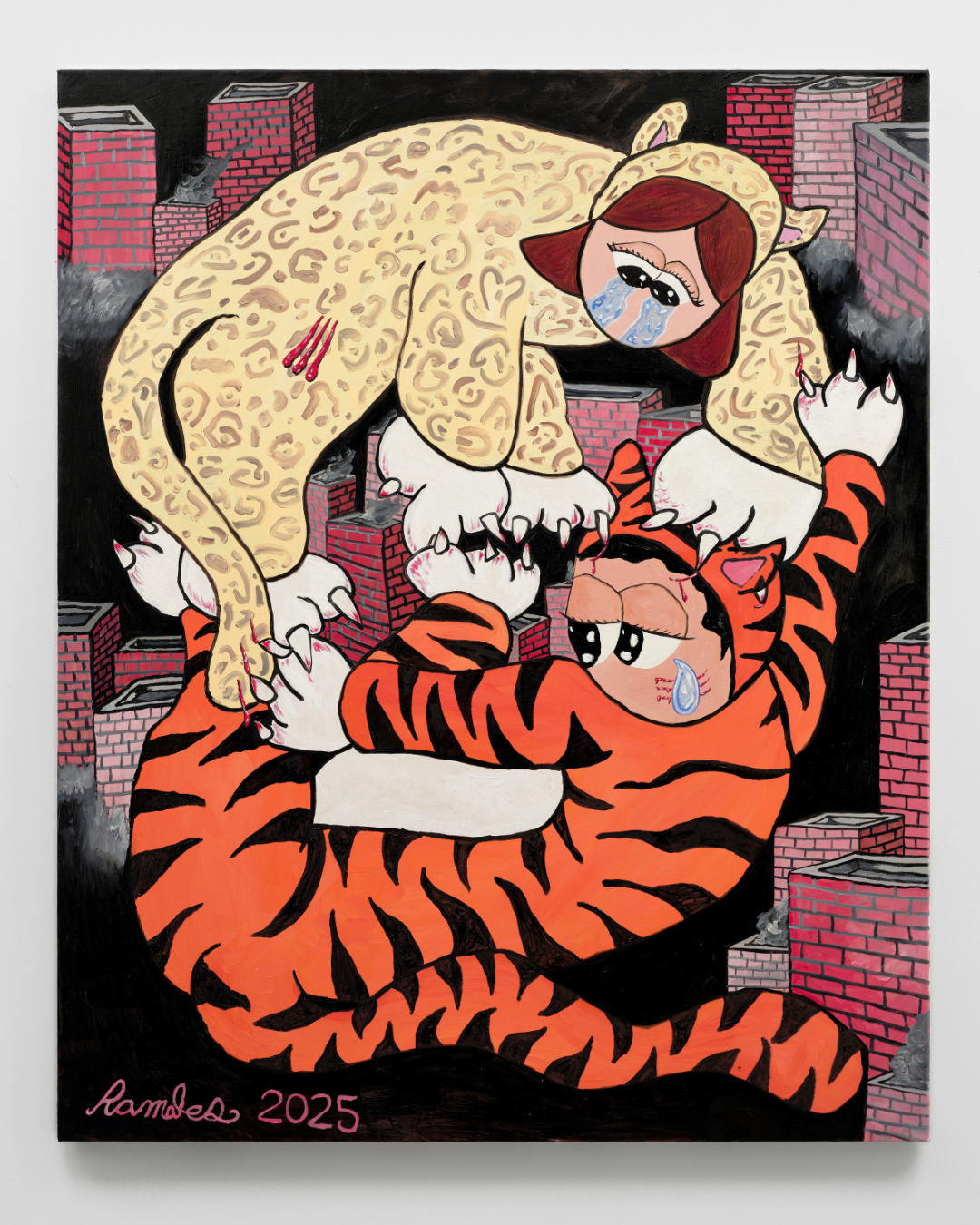
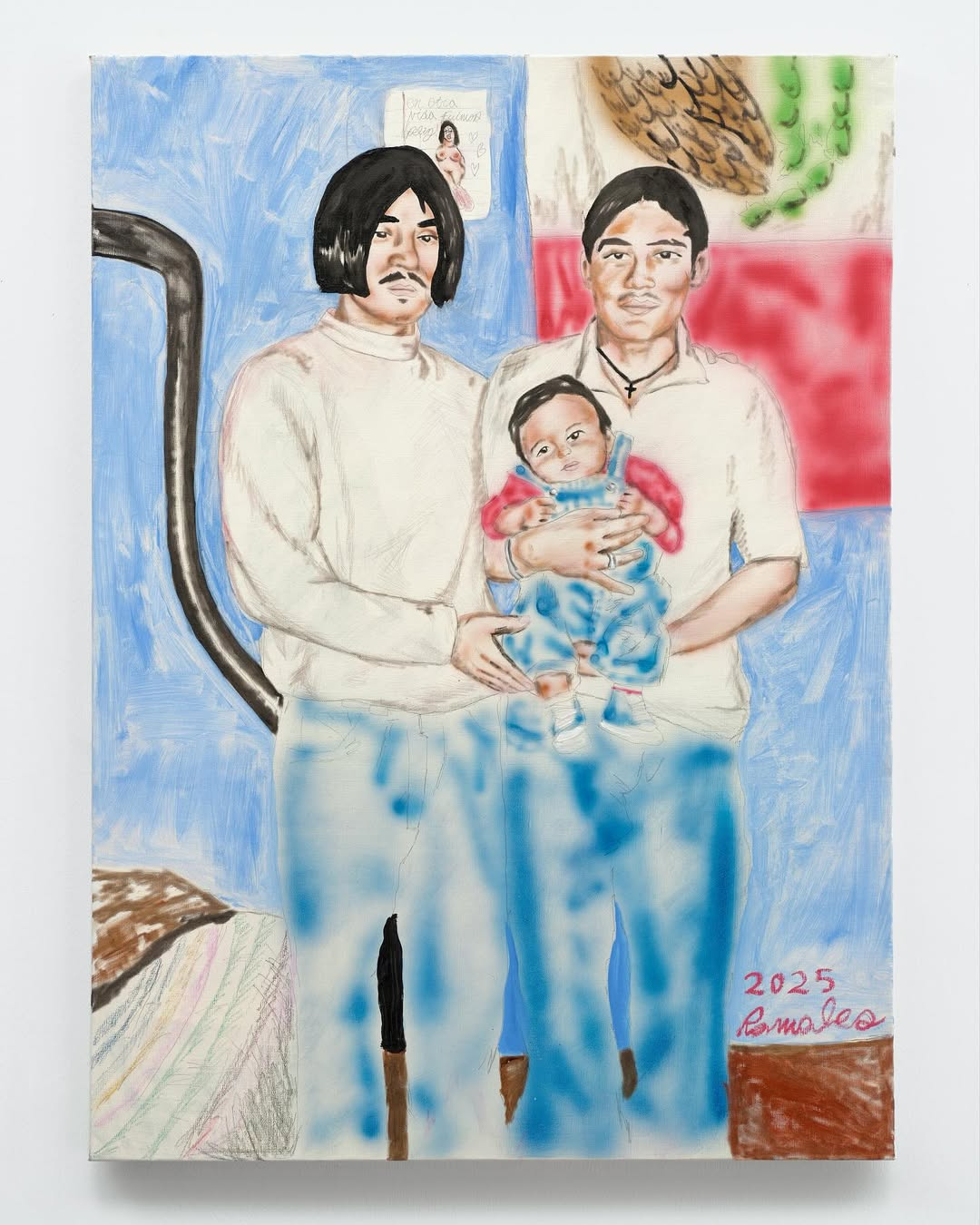
J: Oh, no! Does she like your pieces?
B: She just doesn’t care. To her, I’m just having fun and playing around [laughs], but I think that’s important too, and something I like about Hispanic culture is that it’s constantly humbling.
A: So humbling.
J: It’s funny because growing up, they would call you either gordo or flaca, and that would stick with you forever.
B: No, like gordo, enano, güero, and everything. I had a really tall friend, and her uncle would call her jirafa or just straight up fea.
A: Okay, fea is insane [laughs].
J: That’s so mean! But yeah, being Hispanic means getting humbled from the moment you wake up.
B: As I got older, I think it's important not to think too much of yourself, and my family humbling me kind of saved me. In the arts, you constantly meet people with inflated egos, like we are not doing rocket science.
J: We’re not saving lives.
B: It’s important to love yourself, but also important not to take yourself too seriously. It felt harsh in the beginning whenever they would say what I was doing was dumb, but that really helped me build my own idea of myself because I didn't have any support in the beginning.
J: Really?
B: Yeah. This is my second time going to school, and I remember the first time around, I got into MICA, The New School, and everybody in my family was saying that it didn’t matter, that I should not go to school; they didn’t see the point. I was like, ‘What the fuck?’ But then I had this big pipeline where I started working in schools, and then I started studying to be a social worker, then nonprofit work, and then in 2020 I got cancer—
J: [Gasp]
B: But I beat that and went back to school for production management. I hated it. But in the end, it all just brought me back to painting, my purpose. And the fact that I even got to interview with Columbia University is nuts. I’ll be the first one in my family to get a master’s.
J: It’s surreal to think about. As much as they think they are protecting you, you just need to do you and keep pushing for what you want. Realistically, the moment you get big, they’ll be so happy and pretend like they were your number one fan from the start [laughs]. But what my mom used to always tell me is that embarrassment is not a real thing, and that I should never feel that way for doing what I love, and that really shaped me to not give a fuck.
A: Most people are only thinking about themselves anyway.
B: Now that my family is rooting for me, I still don’t feel any resentment. They’re in survival mode and have more important things to be concerned about. I think that they wanted all of us to be doctors, but they didn’t even know how to educate us to reach that goal. And because they worked all day, I’d be at home by myself until 8 pm, and I couldn’t do my homework because I had no one to help me, so I kind of fell behind for a bit. This did make me feel like I was dumb, but now that I'm older, I can see that I was just a product of my circumstances. I was alone for so long.
J: And in those times, you kinda had to find ways to entertain yourself. My mom used to say I was a pathological liar because I kept making up so many stories.
B: Yeah, I used to lie a lot. It took me a minute to outgrow it. I think unlearning this is something really hard because I didn’t stop until I was 24.
J: Sometimes you have to…
B: There’s like a lie I still like to do, whereas, let’s say you’re with a friend, they study architecture and they take you to one of these STEM parties. I'm like, ‘Can I pretend to be one of you guys?’ And I'll be like oh I went to school in Chicago, and I studied engineering [laughs]. It’s something I like to do just to exercise. But I feel like I used to lie about everything for no reason, but I also think that it comes from growing up with strict parents, because they freak out about everything! Parents are funny because they ask why you are like this. And dang, everything I am is just a product of you.
J: That’s crazy.
B: I don’t lie anymore, or at least I really try to. Except for the parties, then I love to lie.
J: I just love to lie in a social setting where I know I'm never going to see those people again.
B: And people like it too.
A: I feel like I lie, but then I tell the truth, and I’m like, actually no [laughs] because it always ends up going deeper, and then they actually wanna become your friends.
B: It’s dangerous, and then they’re like, ‘That’s weird, lowkey,’ [laughs].
J: It is what it is. What’s been your go-to coffee order?
B: Oof. As of right now, I live by so many Chinese bakeries, so if I’m being fancy, I’ll ask for a half coffee and half milk tea. But today I got an iced coffee with a sesame ball.
J: Wait, yum!
B: What’s yours?
J: Ugh, lately, I’ve been really boring [laughs]. I just get an iced americano with a splash of milk.
B: No foam?
J: No foam. But I can’t lie, I like me an IVL [iced vanilla latte].
B: What’s a flat white?
J: I think it’s literally more milk than coffee.
B: If I’m ever back in Mexico City in one of those silly places, I’m getting a flat white.
J: Gimme that flat white! Okay, okay, what’s something you think is underrated?
B: Homework, lowkey [laughs]. I was doing homework yesterday for like three hours.
J: Three hours?!
B: I felt my brain get so big. I was locked in, especially for someone who never did homework.
J: I feel like we are finally at an age where you can actually enjoy doing homework and focus on things that actually interest you.
B: It feels crazy, like dang, I’m in charge of my life. But what about you?
J: That frontal lobe is developing! I think that for me, reggae music is underrated.
B: People love it though.
J: They doooo, but they just don’t make it anymore. I feel like what people need right now is reggae. What would you say is one thing you want people to know about you?
B: I feel like I’m an open book, and I love so many things, but I really love ping pong.
J: Okay, Marty Mauser.
B: I love not being good at it; I just play for fun. Because sometimes being too good at something gets rid of the fun.
J: That’s like my problem with pool, because growing up, my mom would always say one of the skills you need to know in life is how to play pool.
A: Girl what! That's giving the male gaze.
B: That’s crazy, it’s like saying there are two things you need to know: how to play pool & clean your gun [laughs]. This is mad funny, and she’s from Peru?
J: She is! I think that this stems from the fact that she used to play with all my uncles, and she got tired of losing all the time, so she just got really good, but I think she enjoys ping pong more. I see it as my party trick, to be honest, because every time I play pool, I get so locked in and I’m so good.
B: I hate playing pool in the city, and I don’t get why guys get so thirsty. The second you’re mean, it’s wack, like who cares about pool! No offense to your mom. But also the sighs from people waiting for the table, like, just wait! But that is a cool skill.
J: It’s just funny because when they see girls wanting to play, they’re so quick to think they’ll win anyway. One time, I was at Mr. Fongs with some of my girlfriends, trying to have fun and teach them, and the second one of the guys realized I was clearing the table. He got so cocky, and it was lowkey embarrassing for them, [laughs] because he started making up random rules and wouldn’t even shake my hand after I won.
B: Dang, he really took it personally. So that’s like your thing that you are mad good at pool?
J: I guess, man.
B: That’s a good skill, lowkey. I can totally see your mom lighting a cigarette with her Zippo lighter [laughs].
J: Any secret skill?
B: Ooh, I like to cook.
J: Love it. What’s your favorite thing to make? Like tu plato estrella.
B: Dang, if I’m really trying to impress everybody, I’ll make enchiladas verdes with orange rice and everything.
J: God, I’m so hungry now that you mention that. What is something that’s so ‘Brayan-coded’? Like something that’s very you.
B: Dang, what makes me me?
J: [Laughs], I know it’s kind of a hard question.
B: I think I experience life with not too much middle ground, like my mood can be through the roof or I’m hella moody or sad. But I kinda like that about myself, because I can be so hopeful, and that hope has helped me a lot with my work. That extreme hope really pushed my pursuit of making art that once looked so unattainable. Being hopeful is one of my favorite things about myself. The other day, I was talking about God with my mom, and she was like, “Sometimes, I can’t lie, your own faith inspires me, and it makes me sad because I don't think I have that same level of faith.”
J: I feel like that really comes from within, and that’s why it’s so inspiring. What’s your source of motivation?
B: For the longest time, it felt like such a big cross to bear, like I needed to save my entire family’s universe. But now it kinda feels like a kite, you know? Something that carries me rather than drags me down. I feel hella geeked, I have so many thoughts that my mom and my ancestors didn’t have, the privilege to have or even trying to heal myself in a way. There are so many things that I wish they had the time or space to process. I feel like I grew up with hella anxiety because I was alone all the time and was in therapy for a long time, so getting to talk about it really made me think about how we’re kinda given the opportunity and the chance to wash away all these negative things that we grew up with, and to hopefully one day make the bloodline a bit more clear and free of trauma.
J: Putting that energy out in the world, on God. Thank you so much for taking the time to chat with us today!
Interested in being featured? Email us at 2latemag@gmail.com!
