Renée’s ‘Blue 47’ Finds the Future in the Beauty Salon
Text & iPhone Pics by Olivia Madrid
Renée’s Spring/Summer 2027 collection turns Barbicide, Black beauty culture, and ’90s nostalgia into a hallucinatory vision of the future.
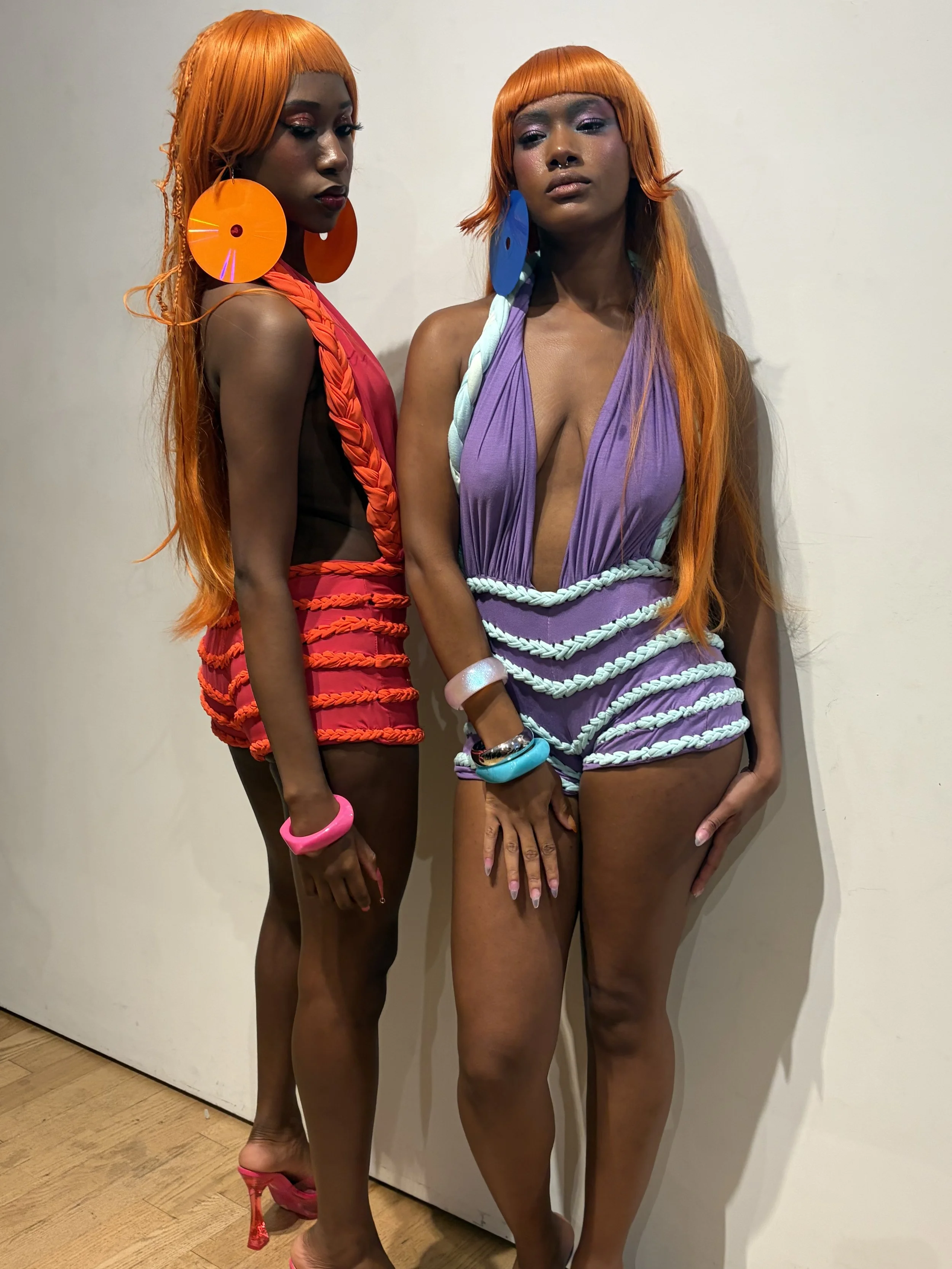
There’s something otherworldly about a salon after hours. The mirrors remain still, reflecting the chairs that sit empty and jars of blue Barbicide glowing quietly beneath fluorescent lights—a familiar object rendered almost alien.
For Renée’s SS 2027 collection, ‘Blue 47,’ creative director and founder Camryn Renée McClain answers the question of what happens once the salon doors are locked in the most fantastical way possible. Barbicide, the unmistakable blue disinfectant found in salons, becomes something closer to a sci-fi movie elixir.
“I imagined a night out in the city, going to a party, and what would happen if someone drank Barbicide.” It is an appropriately strange premise for a collection that thrives on exaggeration.
‘Blue 47’ plays with the visual codes of beauty culture: braids, hair flips, candy colors, and body-conscious silhouettes. Plunge necklines meet beaded details; soft draping paired with loud colors. The cartoonish styling gives the clothes an almost animated quality, while the collection’s saturated palette feels pulled from a pop dream sequence. The references are nostalgic, but the mood feels inherently futuristic.
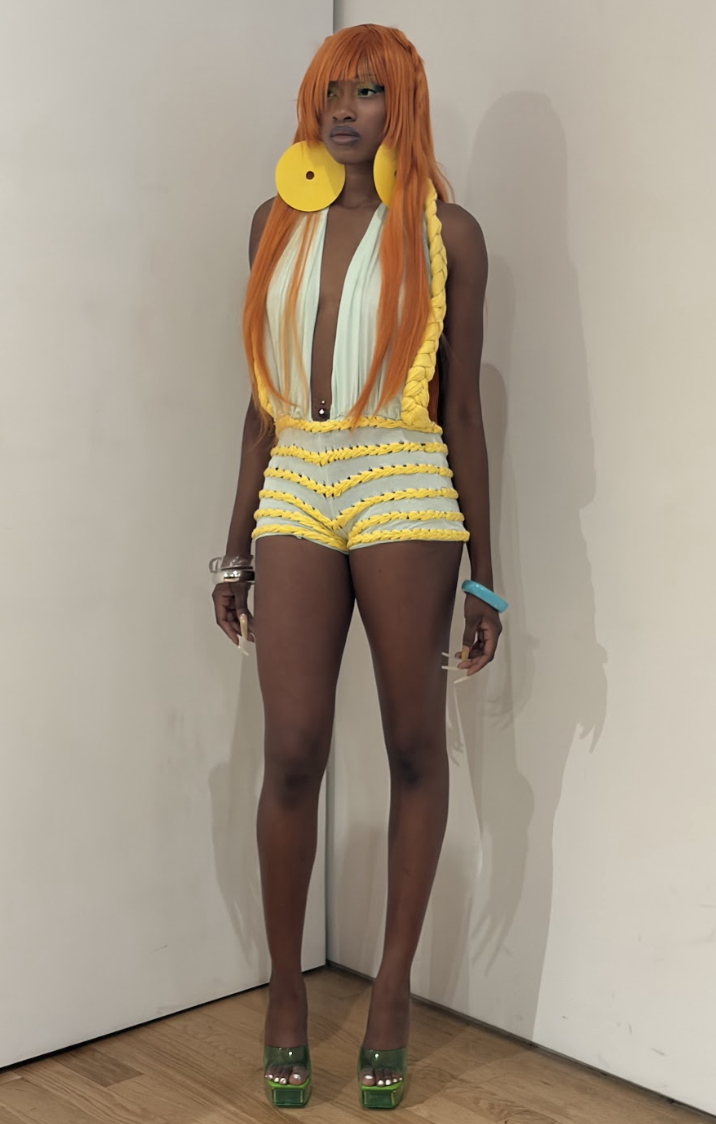
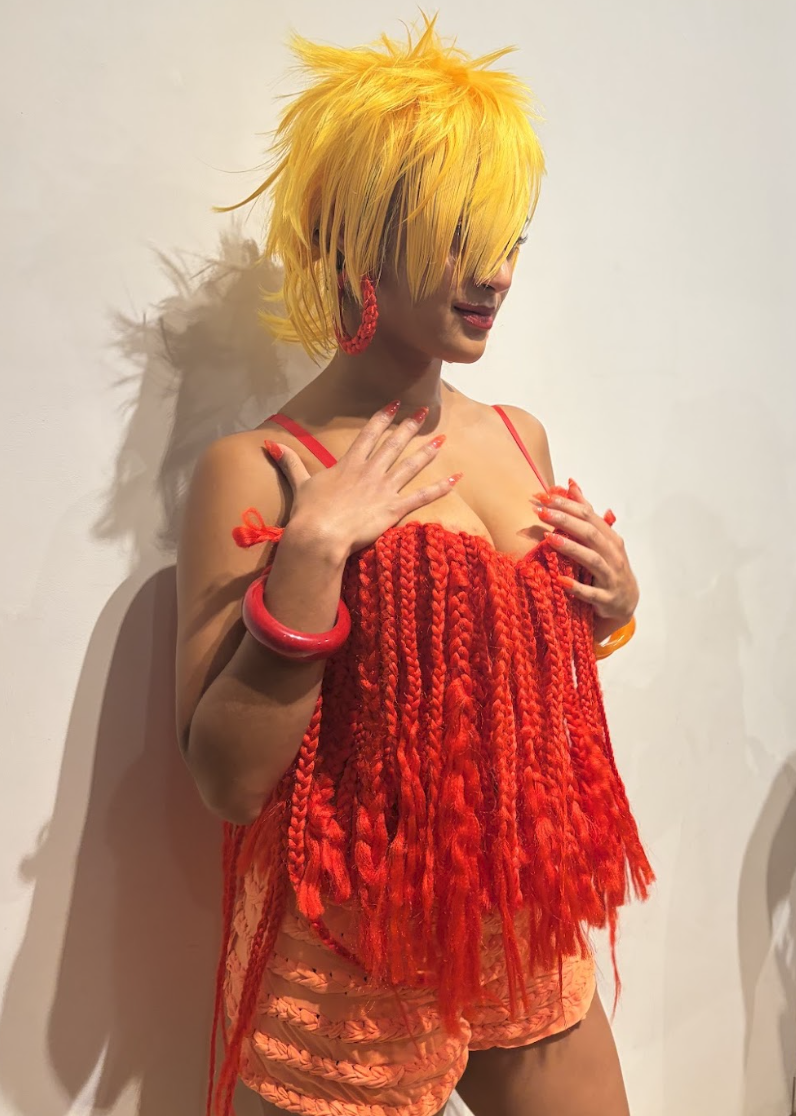
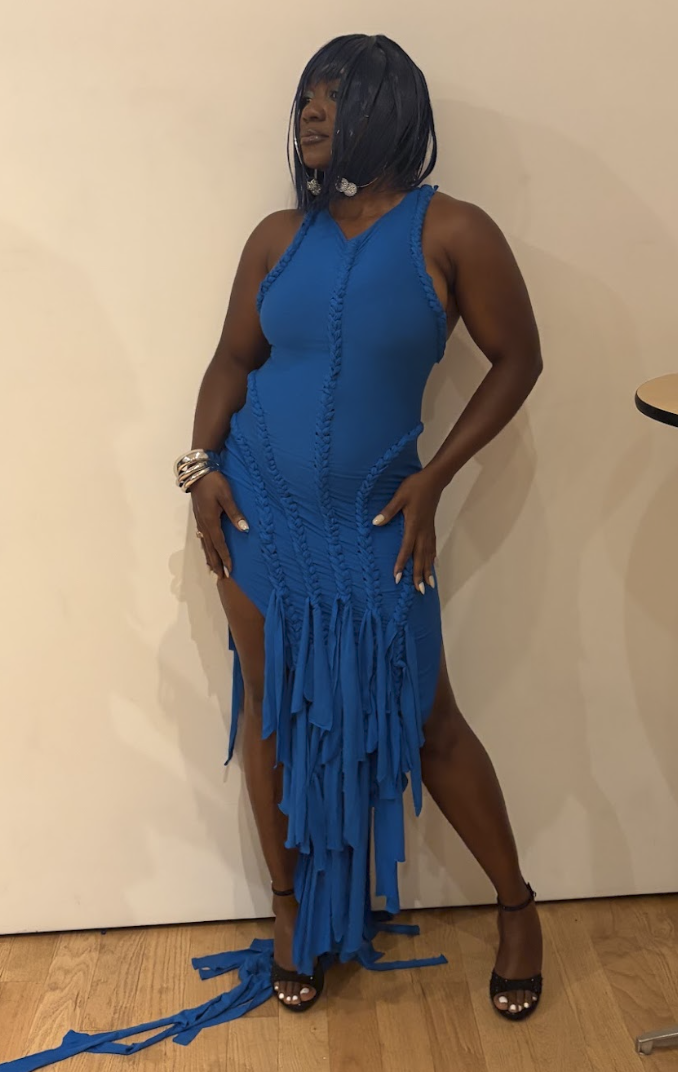
‘Blue 47’ understands that futurism does not necessarily mean chrome, minimalism, or uninspired tailoring. One attendee compared the collection to The Fifth Element, as the colors, exaggerations, and nostalgia come together in McClain’s alternate reality. Like the movie, McClain envisioned a future that is colorful, feminine, playful, and unmistakably Black, denying the future of fashion to move into a bleak space-age.
McClain’s relationship with hair is not simply a styling choice. She grew up around her family’s cosmetology school in Washington, D.C., which is run by her mother but originally passed down from McClain’s grandfather. Salon culture became part of her visual vocabulary long before she began designing clothes. In ‘Blue 47,’ braiding and beauty rituals are elevated from everyday practices into fashion motifs.
A two-piece braided look makes that connection particularly clear. For one model, wearing it felt like participating in the collection’s larger conversation about femininity. “The whole show is about the process of hair and the process of women beautifying themselves, so wearing something that represents that part of womanhood, and is also comfortable, is amazing.”
Despite the plunging silhouettes and body-conscious shapes, McClain doesn’t seem interested in the old-fashioned equation that equates sexiness with restriction in movement.
“I feel very comfortable and sexy,” another model stated. “It’s important to maintain [comfort] even when we’re seeking sexiness; I think Renée is the brand for that.”
That balance makes the collection accessible. These are clothes that are meant to be looked at, but also inhabited: the wearer remains at the center of the fantasy.
“I feel like I’m from another planet…I am a better version of myself,” one model remarked.
That idea of transformation is particularly fitting; the brand’s name comes from McClain’s middle name, and the label’s identity has always been tied to evolution. Her designs draw from memories of African American culture, ’90s fashion, natural hair, and the beauty environment of her childhood.
McClain studied fashion design at Polimoda in Florence before earning her degree in Sportswear from the Fashion Institute of Technology. Her senior thesis led to a Hypebeast collaboration and a New York Fashion Week show in 2023 through Gushers’ ‘Black Voices Create’ initiative.
“She thought outside of the box,” another model said. “From our hair to our looks to our makeup, she’s pushing us [forward] in fashion.”
The models’ hair, makeup, and clothing operate as one complete image; nothing felt incidental. Rather than pulling straight from a 90s lookbook, the collection mutates modern streetwear into a candy-colored future. Beneath the fantasy is a larger cultural statement: for Black creatives and audiences, seeing Black designers occupy this kind of imaginative space carries its own significance. One attendee noted, “It’s important for me as a Black creator to support Black designers. I want to see more of us taking up space.”
By the finale, the Barbicide that anchors ‘Blue 47’ has moved beyond the salon. What began as a familiar fixture of Black hair culture has become a metaphor for fashion’s capability to transform the person who encounters it.
The finale showcased a short film that makes that transformation literal, a preview of what will become a longer film of the collection. The models left the runway behind and took to New York’s streets—their hair, makeup, and clothes perfectly intact—looking less like people heading home from a show than characters who have crossed over from somewhere else.
Perhaps that is Renée’s most convincing proposition for a new age in fashion: to make the familiar feel strange again.
