The Umbrella Shirt: Reflections on Teaching, Learning, and the Power of Perspective
by Professor Mel
In the midst of the hustle and bustle of everyday family life, my youngest son once said, “You are wearing the umbrellas shirt, again?” You can imagine how perplexed I was. In a household with three boys, a husband, and a male dog, it is not often that something I am wearing is noticed, let alone recognized.
After recovering from my surprise, I looked down at the shirt I was wearing. Umbrellas? Where were the umbrellas? Then, suddenly, I saw them, clear as daylight. I had owned this shirt for a year or two, and it was my favorite, though I was never quite sure why. I suppose the design was “different,” at least that is how I had always seen it. My son, however, saw it through a different lens, perhaps one belonging to childhood…when vision is still sharp and not yet blurred by experience.
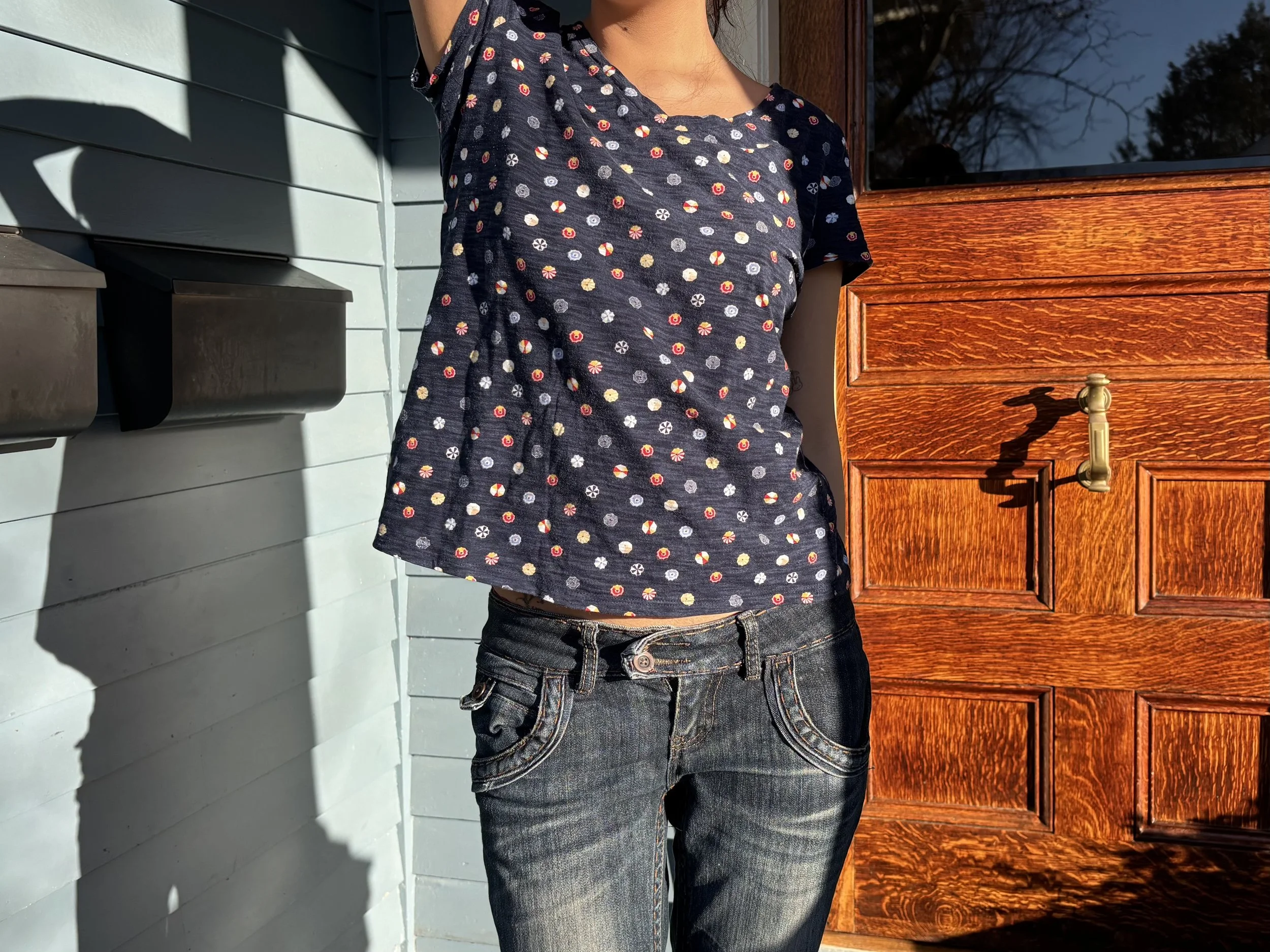
I have thought about that day many times since. It reminded me how we all see and experience the world differently, which is shaped by our backgrounds and prior experiences. The realization connects deeply to my own academic journey, which began when I entered graduate school in the United States. I was a Latina in STEM, an immigrant, a first-generation graduate student, and a linguistic minority student. I struggled to understand academic vocabulary in my classes. In my Avian Embryology class, what was a ‘ridge’? I had no idea. It was not a word I had learned while studying English at the Peruvian British Cultural Institute.
Reading scientific papers for the journal club was especially difficult. Without a strong background in the language, content, or experimental procedures, I could barely grasp more than the title. At the same time, I was adjusting to a new country, a new culture, living with a roommate, graduate courses, laboratory work, and even learning how to get to campus. Why didn’t I think to ask for academic support resources? It never occurred to me. Given that they had not been available to me at my undergraduate institution back in Perú.
Fortunately, I was able to adjust and succeed, largely due to my advisor, who trusted and guided me through my first two years of graduate school in the U.S. I continued to struggle during my PhD coursework. Although my English had improved and I had read countless scientific articles during my master’s program, I lacked the academic foundation needed to comfortably manage graduate-level courses in Cell and Molecular Biology. However, through perseverance and dedication, I succeeded once again.
Thirty years later, taking a course in Higher Education Law opened my eyes in a new way. For the first time, I truly understood what it feels like to be a student who does not speak the academic language of a subject. You may be highly capable and motivated, yet feel completely lost; that feeling is devastating. Having an instructor who can scaffold learning and provide access is invaluable.
It was only when I stood on the other side, behind the podium, that I fully realized there could be students like me sitting in the classroom. Students who are struggling quietly, unseen. I knew I had a responsibility to reach them in ways that I once had not been reached. I viewed my students through the lens of my own experiences, recognizing that each brought unique lived experiences shaped by language, culture, race, gender identity, and educational background. I also knew that students differed greatly in their knowledge of the “hidden curriculum,” knowledge I myself lacked when I began graduate school.
We often group students because it feels efficient: underrepresented students, linguistic minorities, international students, and first-generation students. Over time, I came to understand that students within these groups are not the same.
This became especially clear through my conversation with two students who approached me about forming a group where they could feel a true sense of belonging. As I listened to their stories, I saw through a new lens what they were experiencing. Although they shared racial backgrounds, their lived experiences were completely different, shaping how they navigated academic spaces and life itself. They helped me recognize the diversity that exists within groups often perceived as homogeneous.
We all carry intrinsic biases rooted in our lived experiences. Only when we are able to name them can we begin to mitigate them; our biases shape how we see the world. When we intentionally choose to look through different lenses, we gain access to new perspectives that challenge our assumptions.
The umbrella shirt now sits at the bottom of a drawer, its colors faded. My son has grown, but I continue to grow as well, advocating for those who pass through our classrooms unseen, misunderstood, mistakenly grouped, unappreciated, and voiceless.
