DIETRICH’S POTATO SALAD
Text by Liv Elniski
In the oppressive heat of this past New York summer, I met up with a sixty-something year old vintage seller on the outskirts of Central Park East to purchase feathers: a huge bundle of antique ostrich plumes and a molting, black chicken feather boa that’s now lovingly draped, like a decadent relic, around a mirror in my room (everyone needs a reliable feather dealer). Over the last year or so, I’ve also developed an all-consuming obsession with millinery. In the process of attempting to transform my space into a makeshift 1930s-style boudoir, and my comically small Brooklyn wardrobe into a miniature archive of screen-fashion eccentricity, I began to question: is fashionable glamour just as much about moxie and intention as it is access?
Take, for instance, Little Edie of the widely-beloved 1975 documentary, Grey Gardens. Heartwarmingly eccentric, she prowls her decomposing East Hampton mansion that she shares with her mother, in a hair scarf and skirt both fashioned of repurposed cable-knit sweaters, held together only with brooches. Edie is fabulous in the same way that Hollywood Boulevard in L.A. is fabulous: rough around the edges and charged by a permanent sense of decaying glamour that refuses to be lost to time.
In her 2017 essay, “Signs of Wear: Encountering Memory in the Worn Materiality of a Museum Fashion Collection,” design scholar Bethan Bide situates objects in the Museum of London‘s fashion collection in dialogue with family photographs of her late grandmother, interrogating common notions of austerity fashions. Bide reflects on her grandmother, invoking the glamour of early cinema in everyday conversation—like remarking that the woman who read the weather on the six o’clock news reminded her of Joan Crawford, or how the style of her new jeans were “very Jane Wyman.” For women like Bide’s grandmother, Hollywood starlets and the accompanying film magazines that circulated their ultra-stylized visages, provided a template for how to dress fashionably, and how to imagine a different life for themselves. While most women couldn’t afford any of the clothes worn on screen—even the department store cinema shop reproductions—they could certainly emulate their effect through hair, posture, and makeup.
Bide’s grandmother and I are not so different—feathers are just part of my latest affliction. Over the last year, I have turned into the kind of person who rouges my lips with the same deep-plum lipstick each day (aptly named Film Noir), whether to class or to go sit and write at a cafe. And who, every two weeks, has their Louise-Brooks-inspired bob trimmed to geometric perfection (I would be absolutely nothing without my hairdresser, Kaitlyn).

Me, my beloved bob, and Film Noir lipstick, photograph by Mila Rae Mancuso
As Bide writes, her grandmother's pursuit of fashionability “enabled her to transform the post [World War II] London landscape into a glamorous place by playing at being the leading lady, even if her costume wasn’t quite right, through the way she wore a new belt or the positioning of a hair clip.” Both Bide’s grandmother and I preach the possibility of embodying the idiosyncratic glamour of the Marlene Dietrich or Crawford type—as long as you are prepared to commit to reapplying your lipstick every hour or so, and to spend your evenings on eBay searching for a 1980s-does-40s wool-gabardine skirt suit,’ (pro tip: search low-to-high price). I could never pretend that Bide’s grandmother's life in 1940s post-war London and my comfortable life in Brooklyn are comparable. However, in our own contexts, we are engaged in a similar ritual of daily world-building. Both of us use style, gesture, and self-presentation to inhabit a world of style that feels lost to time and circumstance, making the instability of our respective cultural and political moments feel more bearable. As Italian surrealist fashion designer Elsa Schiaparelli remarks in her 1954 autobiography Shocking Life, “the only escape is in oneself.” Anything, if just momentarily, to flee the specter of impending authoritarianism in the United States and the scourge of athleisure that has taken every street corner of New York City.
As a student in New York who works part-time, almost all of my money goes to rent and sheer survival. Whatever remains goes to my upkeep—because feeling glamorous allows me to live in a fantasy world where things feel, if not perfect, at least okay. More recently, I’ve also found myself ineffably preoccupied with the kind of accessorization one can only find sitting in the stale seats of an art-house movie theatre that plays 1920s and 30s films on the big screen. There’s truly nothing like watching Greta Garbo or Kay Francis that way,larger than life, suspended in the softly lit focus of early film cameras, dripping in bias-cut silk and crowned by a perfectly fitted wool cloche.
Though these preposterously glamorous screen vixens seem to share little with my life as a student in New York, it’s no surprise that I’ve become enamored by them. Their highly-manufactured visages were always intended to inspire ordinary people.
The concept of glamour itself is closely tied to the emergent beauty, fashion, and entertainment industries of the early twentieth-century. In her 2011 essay “Elsa Schiaparelli and the Epistemology of Glamorous Silence,” women and gender studies scholar Ilya Parkins remarks, “Since the nineteenth century, glamour has been invoked to denote some mysterious ineffable quality. The word shares an etymological heritage with others that describe arcane knowledge, magic, and the occult.” This seemingly inexplicable obsession that I, and many before me, have developed, is ultimately an endeavor to access this mystery—to manufacture a feeling of enchantment through material objects, stylized moving images, and physical gestures that promise a transformation of some kind, even if just momentarily.
Although, as I see it, knowing the right keywords to type into the eBay search bar matters more than material wealth or the resources of a studio costume designer. If my own glamour hinges on search terms and second-hand luck, old Hollywood’s glamour relied on something even more precarious: supply chains.
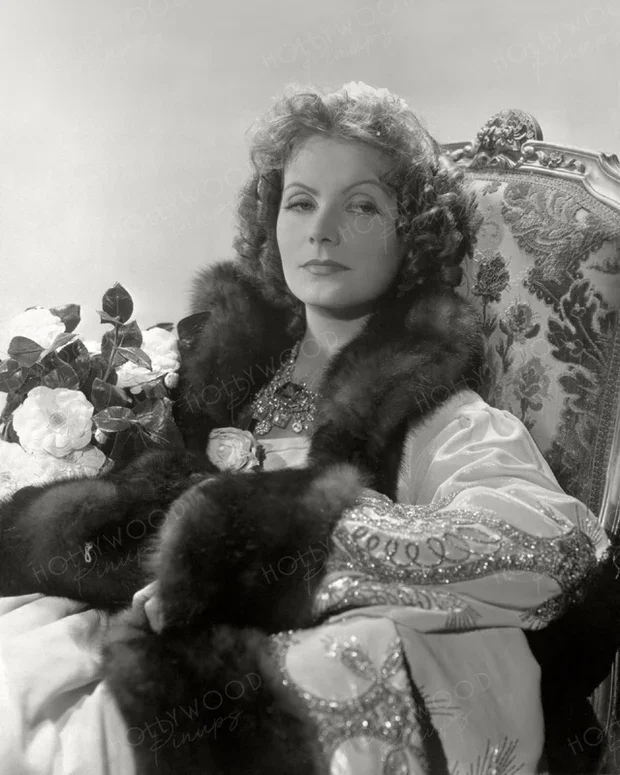
Garbo dons sable-trimmed evening outerwear in Camille (1937) dir. George Cukor, costumes by Gilbert Adrian.
Between the late 1910s and 1940, Hollywood saw some of the most tantalizing on-screen fashions in all of modern history. Gowns by costumers provided a world-building experience for theater-goers in the form of thousands of shimmering beads, and eleven-yard sable borders like the one that trimmed the opera coat by Gilbert Adrian for Garbo in Camille (1937).
Devastatingly, the onset of World War II marked a somber beginning for a much more serious decade of film and screen fashions. Even the previous decade's most extravagantly dressed leading ladies, like Ginger Rogers, relinquished the endless spools of tulle, chiffon, and feathers of her dream-like, dance-on-air sequences with Fred Astaire. The madcap Carole Lombard turned to much more serious endeavors when, much to the chagrin of film-diva worshippers, she appeared in off-the-rackclothes in RKO’s 1940 film, They Knew What They Wanted.And just like that, this chiffon and sequin-lined portal through which movie watchers could enter and escape the many burdens of day-to-day life disappeared.
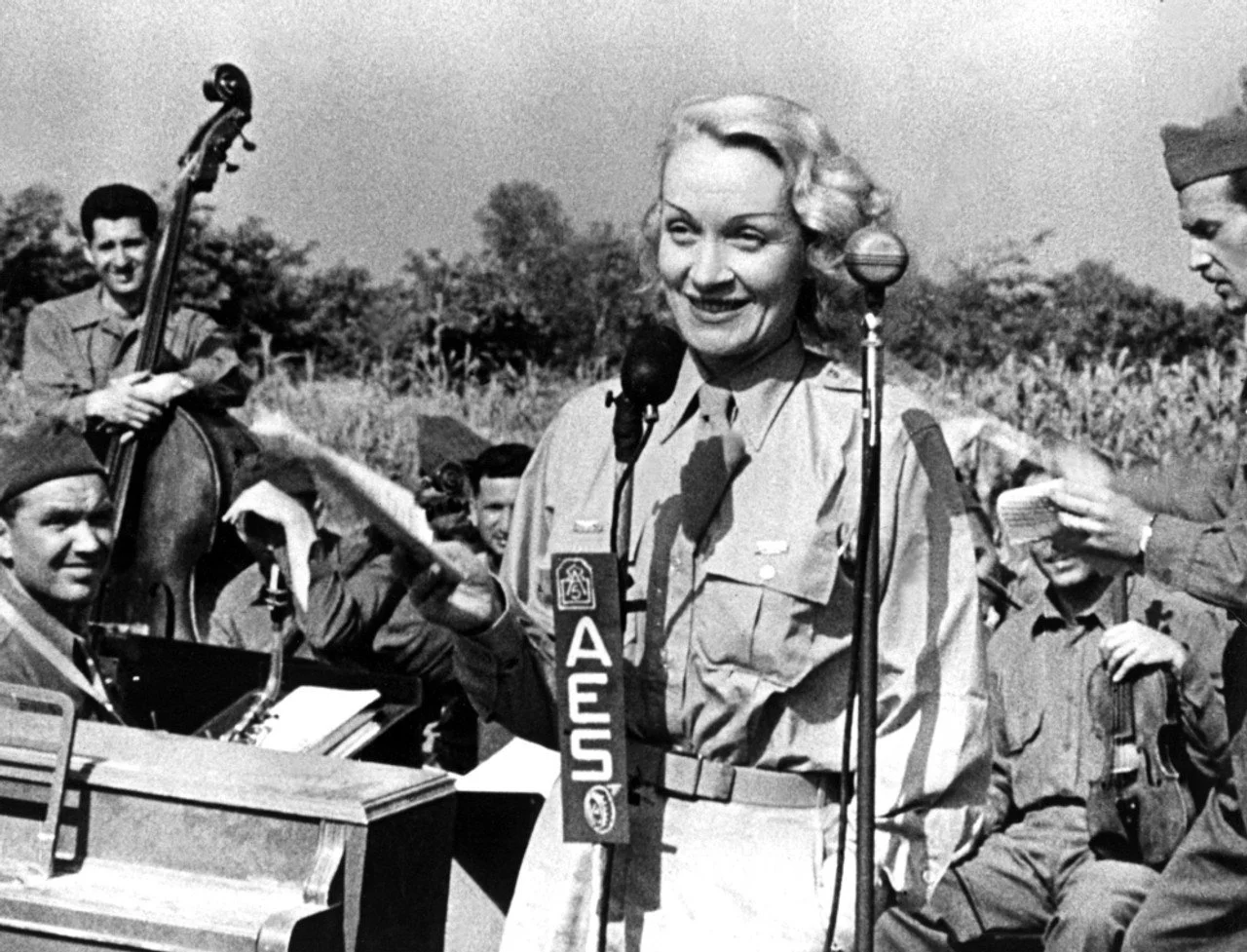
Dietrich & the troops, c.1945
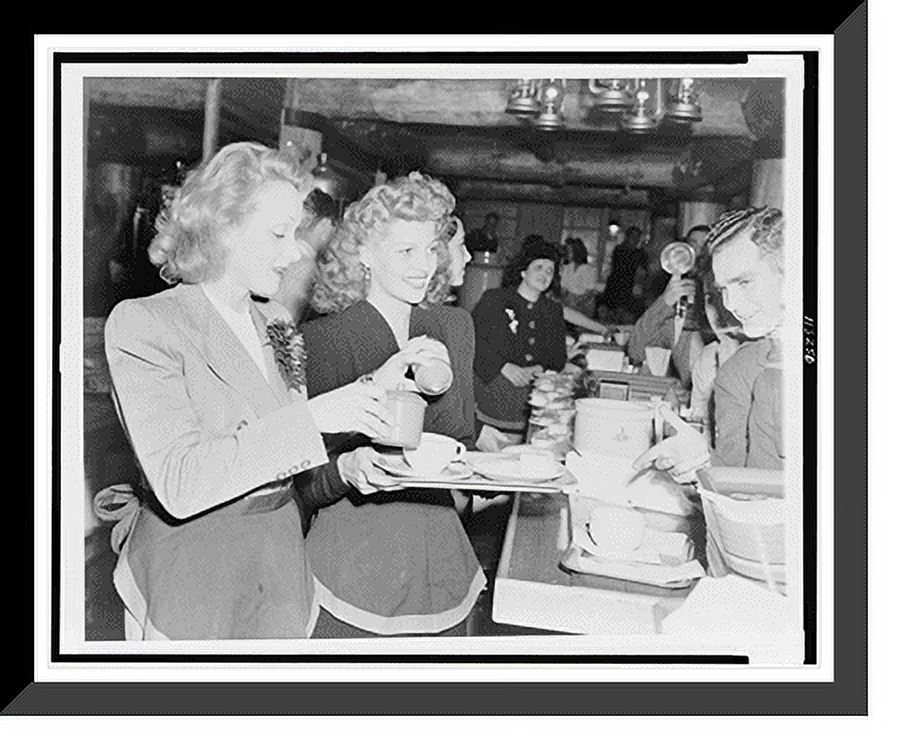
Dietrich and her pal and fellow starlet Rita Hayworth serve soup at the Hollywood Canteen c.1940s
The more austere costume designs during the second World War signalled the fading out of Hollywood’s most glittering era. The biggest divas and glamour girls packed a bag, tied their hair in a scarf (Rosie-the-Riveter style), and went off to sell war bonds across the country. Dietrich traded her sultry, erotic veil masks and slithering black dresses by Travis Banton for military-inspired tailored suits (also by Banton, of course) to entertain the troops with songs like “Falling in Love Again” and “Don’t Sit Under the Apple Tree with Anyone Else but Me,” at training camps, in field hospitals, or on hastily erected plank stages in the jungles of the Pacific. Dietrich joined her fellow glamorous sisters at the Hollywood Canteen, where she made massive bowls of her famous potato salad, and washed dishes, “I never even broke one,” she later proudly confided.
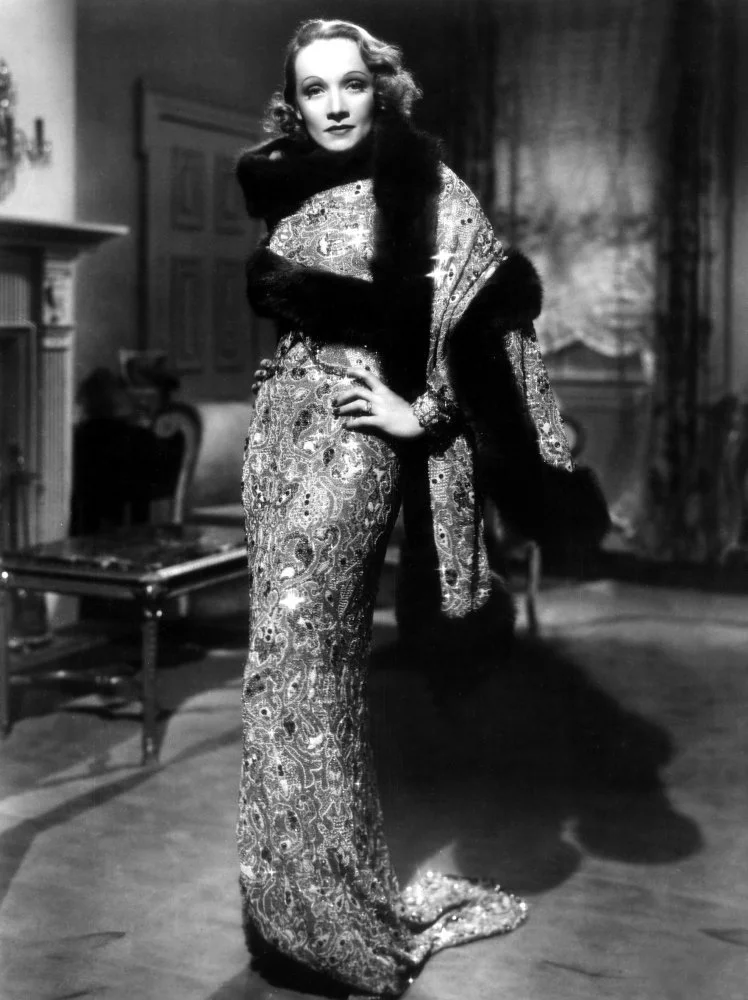
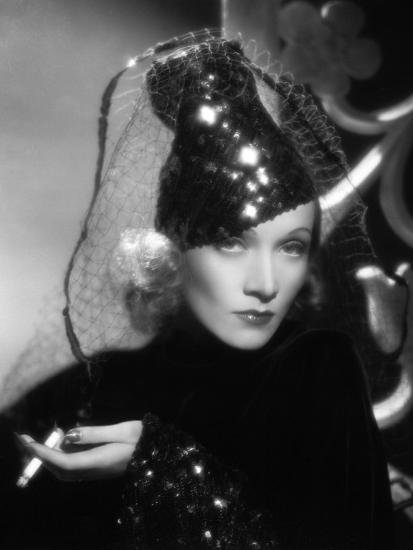
Dietrich in Angel (1937) dir. Ernst Lubitsch, unbelievably sumptuous costumes by the one and only Travis Banton
With the onset of war—suddenly, one of the most grave problems faced by a studio designer was the scarcity of luxurious materials needed for the execution of movie costumes. Female film fanatics had become accustomed to viewing their favorite motion picture divas inside the darkness of the period's art-deco auditoriums, bedecked head-to-toe in the utmost unattainable version of the decade's fashionable ideal. The bugle bead, so utterly indispensable to realizing the visions of Banton, Adrian, and their contemporaries, was the first to vanish. Prior to the war, these beads were imported in massive quantities from Czechoslovakia, but Adolf Hitler’s annexation of the country cut off supply even before America entered the war in 1941. Remaining stock of lace trim, beads, jewels, and sequins were hoarded, jealously guarded by designers who found themselves bartering among one another. Fabrics of all kinds became nearly-impossible to acquire, including the lamés, brocades, silks, and velvets that had more than once been used to fashion the figures of stars like Claudette Colbert as the Egyptian queen in Cleopatra (1936), when material and ornamentation were used with abandon.
By 1942, all reserve stocks of these materials had been depleted, and studio workrooms were functioning under make-do-and-mend conditions. A devastating result of this—Hollywood’s most magnificent creations became sacrificial lambs, guillotined in the name of necessity. A skirt from one dinner gown may have been paired with a top from another, and trimmed with beaded motifs from yet another (much like Little Edie’s personal wardrobe). Tailored wool ensembles were deconstructed and fashioned into new suits, which would come to define the austerity look of both film and mass-produced fashion in the 1940s. Film noirs like Laura (1944), starring Gene Tierney, with costume designs by American fashion designer Bonnie Cashin, embodied this newly controlled on-screen style.
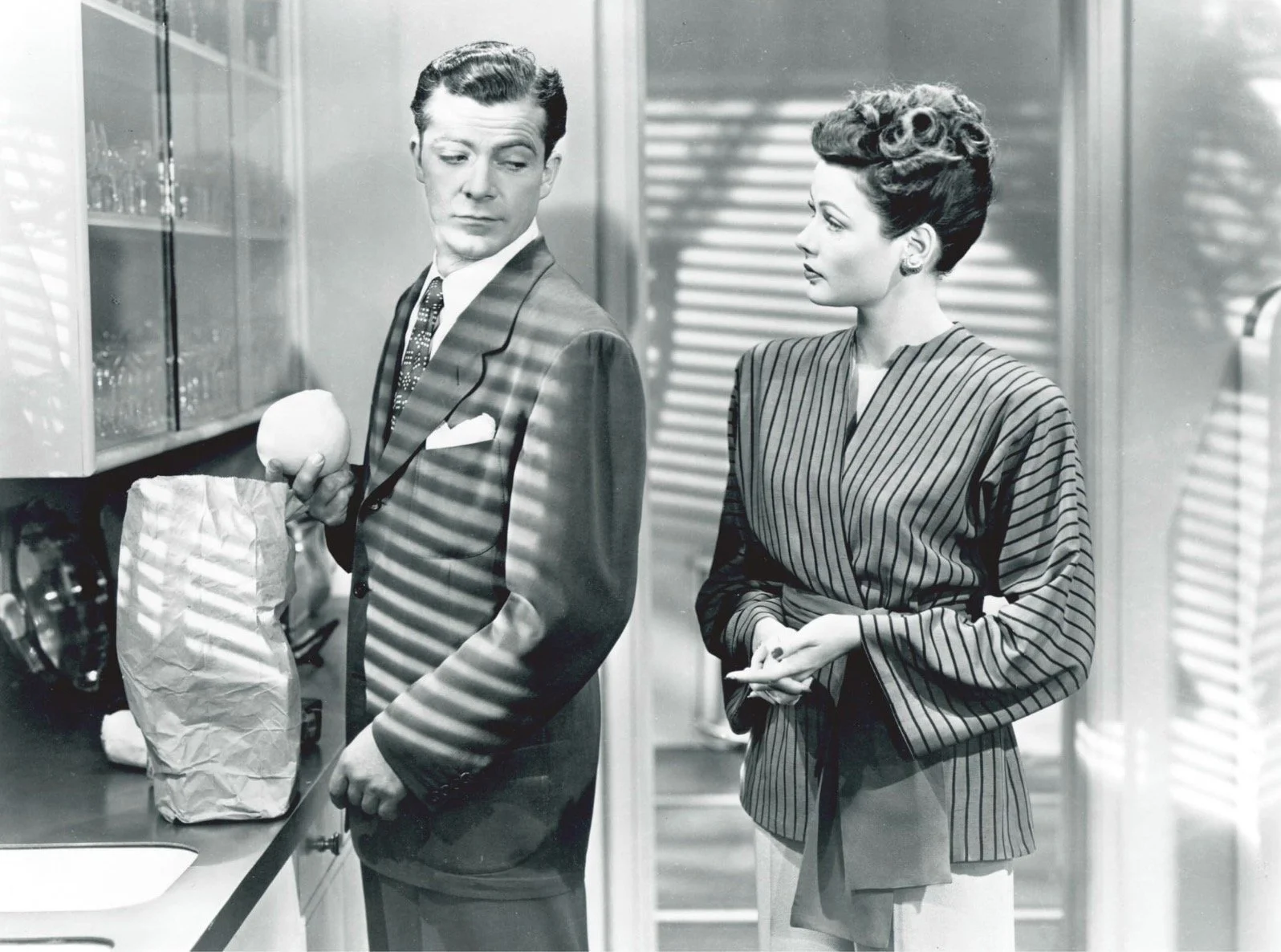
Gene Tierney stars as Laura Hunt in Laura (1944), with austere costumes by Bonnie Cashin. Via IMDb
Never again would a movie budget tolerate an Adrian-style sable border or a purely aesthete rose-point lace like the wedding veil Hattie Carnegie, the famed New York custom designer, created for Constance Bennett in Our Betters (1933). Wartime restraints in Hollywood began to reveal the true ingenuity of screen costume designers. The resulting look proved that Hollywood could still procure and manufacture an ideal vision of fashionable beauty under scarcity: one that was pared down, but still entrancing.
Everyday women’s fashions in mid-century America faced a similar fate. Almost immediately following the United States; entry into WWII, there was a renewed need for rationing. Shoes were the first to go: as leather resources became scarce, government controls limited civilians to three new pairs a year. The occasional exception was made, but only if you could prove that the shoes were not simply being used to follow fashion or maintain personal appearance. Quickly, shoes made of unrationed materials like cloth, rope, and wooden soles became the fashion. The cobbler also became less accessible, and shoe makers were forced to engineer functional footwear that minimized the need for professional intervention. This restraint resulted in fabulously dramatic platforms and bold architectural forms—and somehow, shoes of the 40s feel more theatrical than those of other periods: tangible proof that even in moments of frugality, fashion finds a way to imagine new possibilities for beauty. In other words, austerity didn’t do away with fashionable footwear—it did, however, require a new kind of bravado from American shoe manufacturers.
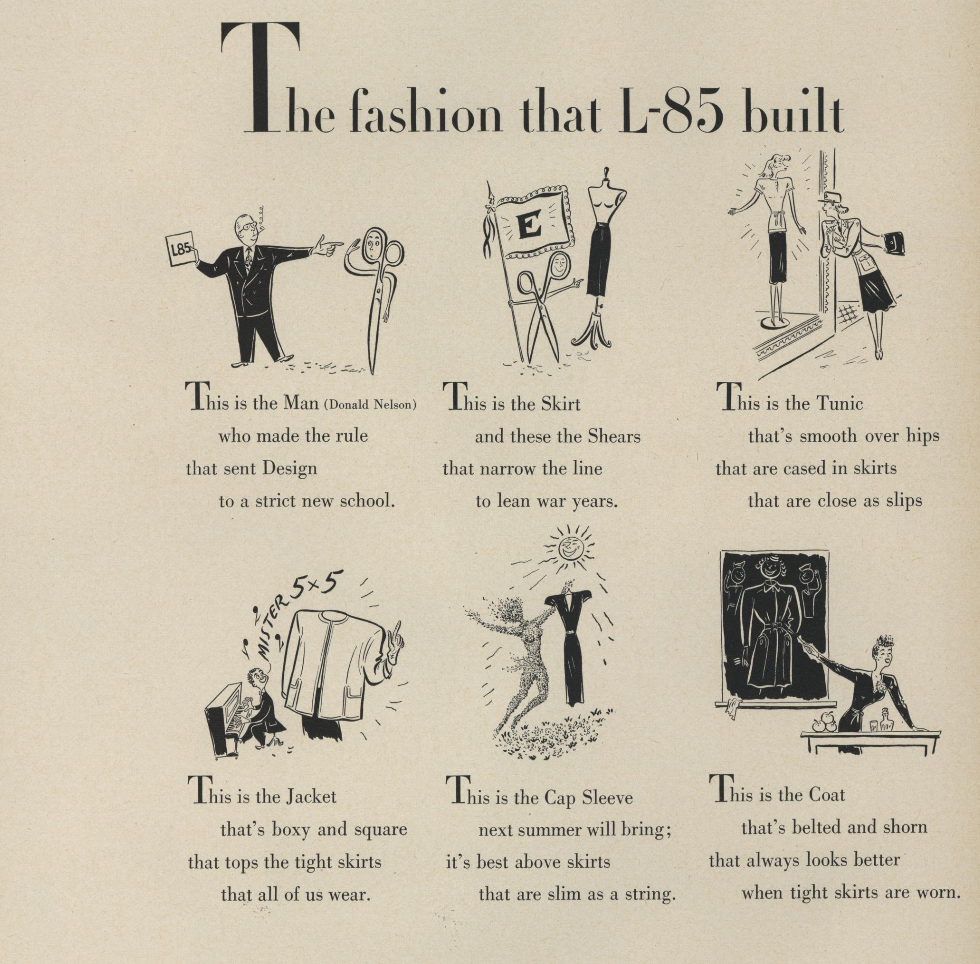
‘The Fashion that L-85 built” Vogue February 1944
Whispers of clothing rationing followed shoes, and consumers, just like costume designers, motivated by a fear of scarcity, rushed to local stores to buy up all the stock. In view of impending shortages, on Friday, April 10, 1942, the War Production Board (WPB) of the United States government initiated General Limitation Order L-85 to ration “Feminine Apparel for Outer Wear and Certain Other Garments.” This order stated that “the fulfillment of requirements for the defense of the USA has created a shortage in the supply of wool, silk, rayon, cotton, and linen for defense, private account, and for export,” describing its actions as being in the name of public interest. L-85 largely focused on measurements and lengths of garments to conserve textile resources. French cuffs, double-layered material, leg-of-mutton sleeves, pleating, shirring, and inside pockets were all banned from the manufacturing of women’s clothing. The resulting look was simplified, straight dresses and skirt suits, free of lapels or heavy ornamentation.
Another notable aspect of L-85 is that it was meant to convince the public that fashion would be virtually frozen in 1942, thus stalling any radical changes in women’s styles. The idea was that if fashion no longer existed as it had historically, meaning, changing with each coming season, there would be no reason to purchase new clothing. But alas…stylish women prevailed, becoming creative in the realm of hair: ladies lovingly curled their hair into "victory rolls,” topping their patriotic coifs with whimsical, decorative millinery—something untouched by rationing. Milliners like Lilly Daché pioneered turban styles, wide-flat brims, and towering architectural creations embellished with felt and straw flowers, bird feathers, and bejeweled brooches.
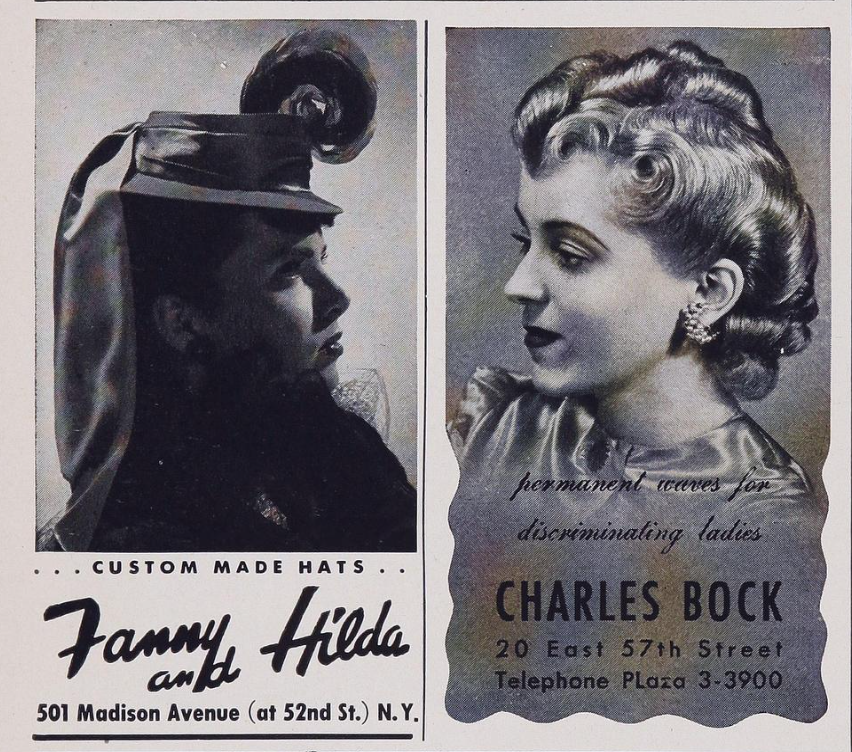
Town and Country, April 1942
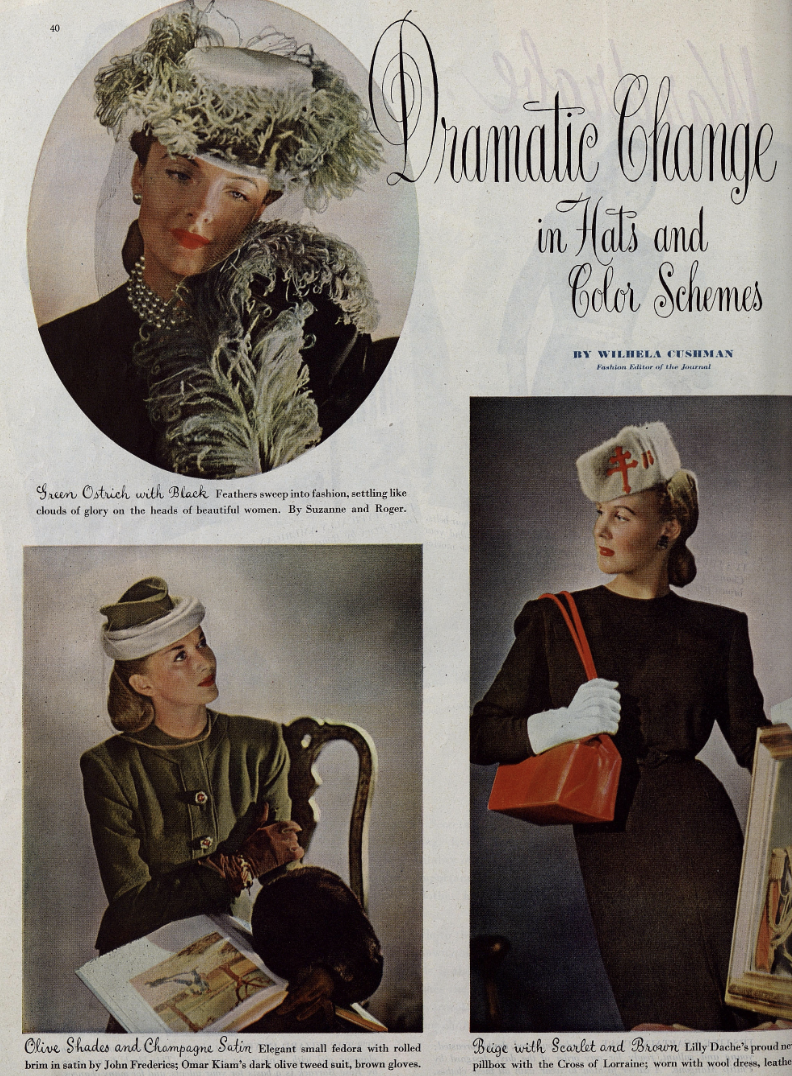
A Lilly Daché millinery advertisement emphasizes “dramatic change” in hat styles in contrast to the largely unvarying clothing styles of wartime. Ladies’ Home Journal, October 1944
L-85 enforced stagnation grants 1947 an almost mythical status in the fashion history canon. French designer Christian Dior’s “New Look,” or as he called it, the “Bar Suit,” was less about innovation or newness than it was about the explosive reintroduction of glamorous excess that had been deliberately suspended for half a decade. This year’s almost revolutionary status in the realm of the sartorial is about a return to the pre-war fashions that, for women, served as conduits for aspiration, desire, and spectacle. The Bar Suit’s heavy circle skirt, requiring an approximate 20 yards of wool fabric and architecturally sculpted bodices, served as a reclamation of ostentatious abundance (as well as discomfort and constraint).
Around this same time in American fashion, female sportswear designers were pioneering a new kind of dressing—one that is often described as liberatory, especially when placed in contrast to work by male designers such as Mr. Dior. Claire McCardell, who had recently emerged as a major player in the American design world, pioneered wrap dresses, separates, and ballet flats…among many other things. One of her most widely celebrated designs, the “Monastic dress,” wholly embodied her design philosophy: an entirely pleated (almost Fortuny-in-style) shift dress that came with a simple string belt allowing the wearer to shape the garment to her own body. McCardell’s clothes were meant to shape TO you, rather than your body conforming to the dictates of a garment. In this moment when Dior was asserting his personal post-war nostalgic fantasy of femininity, McCardell and other American female designers began developing a new modern design vocabulary of ease and flexibility. And, they did this within the bounds of wartime restriction.
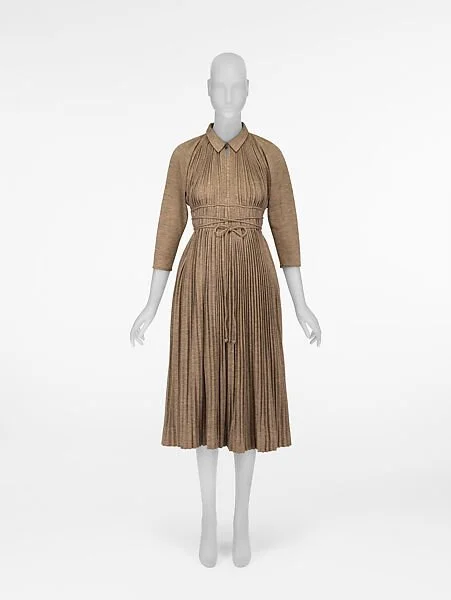
“Monastic dress” c.1949 by Claire McCardell. Via The Metropolitan Museum of Art, New York
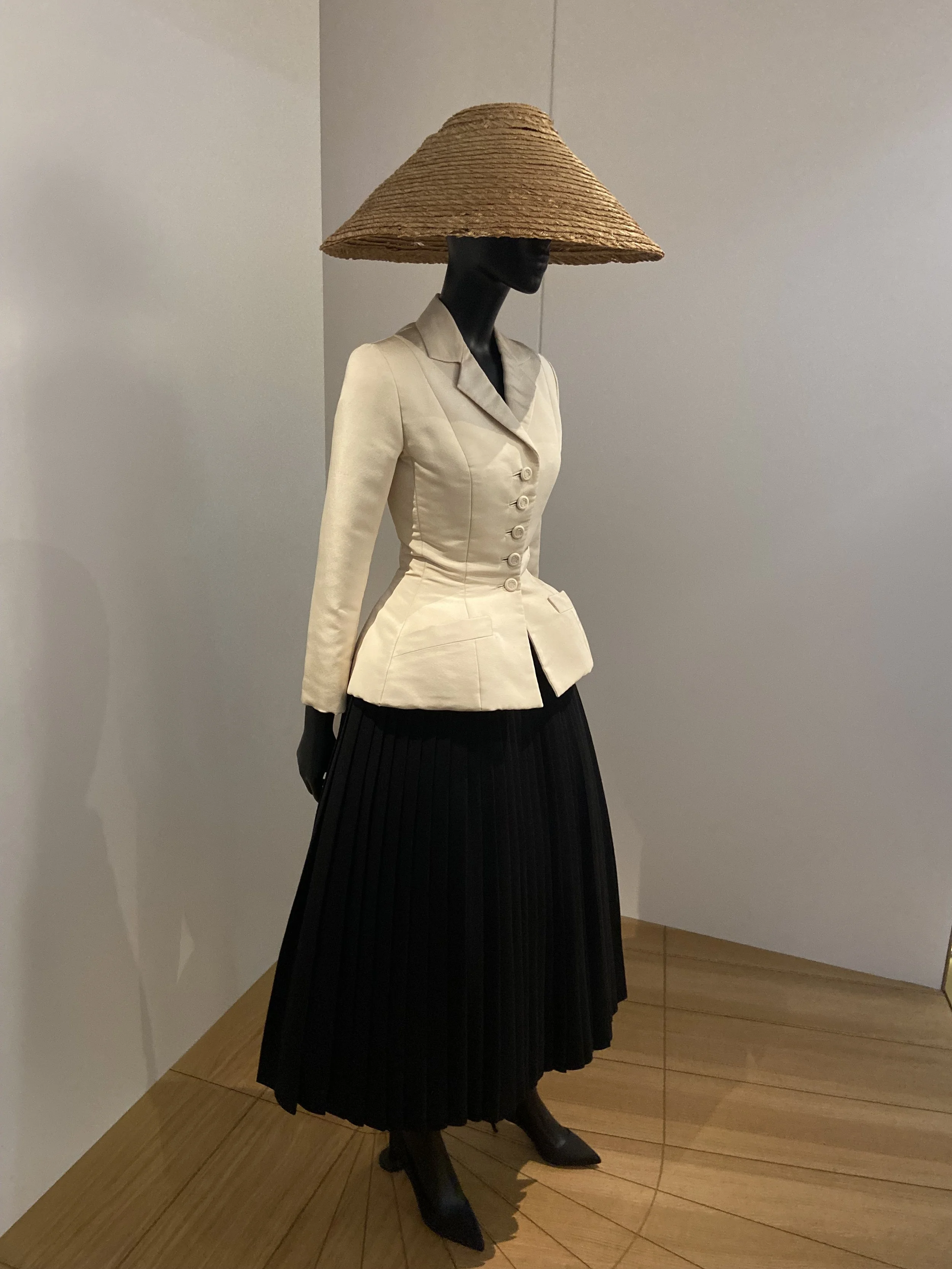
Christian Dior Bar Suit at the Dior Gallery in Paris, photo by me
A recent biography of McCardell by Elizabeth Evitts Dickinson largely focuses on the Dior versus McCardell dichotomy—or rather, excess versus restraint, the old world couture model versus the new emancipatory nature of American sportswear. This framing has become a foundational way of approaching the study of mid-century Euro/American fashions. Backward-looking, hyper-feminine European fashion versus a forward-looking “American look.” This contrast is seductive in its simplicity—however, risks flattening the possibilities both designers work as being viewed as emancipatory. It's more productive to view Dior and McCardell as two different responses to a moment in history. The New Look emphasized excess and sculptural artifice as peak femininity at a moment when these things all of a sudden became technically possible again. McCardell, on the other hand, extended a wartime design vocabulary, newly adopted by most designers and almost all women (including herself), believing that modernity could, and should be expressed through a democratic ease. Both designers are contrary examples of how fashionability and glamour are rooted in and defined by one’s own intentions and desires, whether through an architectural excess or an unpretentiousness grounded in modern practicality. Sequins and feathers and furs can be just as vital to everyday life as raw practicality.
The “hemline index,” a theory favored by fashion writers and critics alike, identifies a supposed relationship between trending fashion styles for women and economic and political indicators. In a 2017 essay, “The Looks of Austerity: Fashions for Hard Times,” author David Gilbert remarks that, “the relationship between austerity and the austere is complicated, and any temptation to look for neat correlations obscures the multiplicity of responses.” He argues that beyond the index, there is a much more potent set of questions about fashion systems and the content of fashion—its “looks, meanings, and uses”—and how these qualities respond to times of hardship and affluence. With Gilbert’s words in mind, we can view a person’s wardrobe, both on and off-screen (whether during wartime, or not) as not just a mirror of economic constraint, but a tangible sartorial record of adaptation, ingenuity, and the constantly shifting politics and cultural ideals of dress.
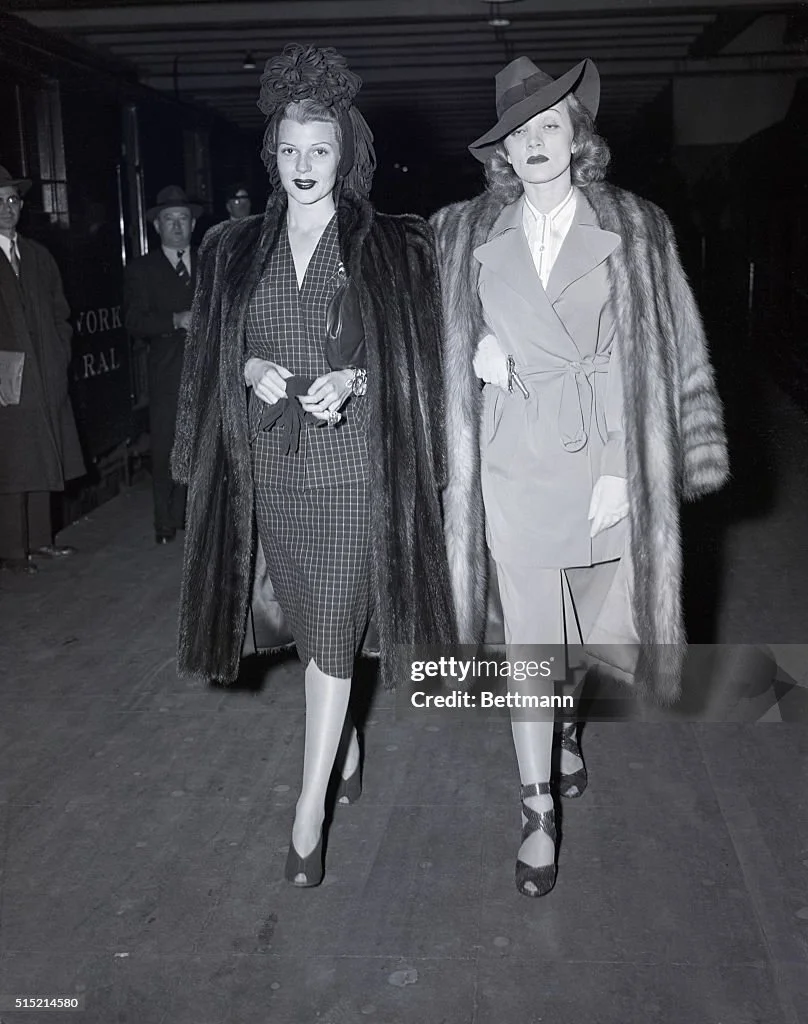
Hayworth and Dietrich clad in perfectly tailored suits and fabulous fur coats
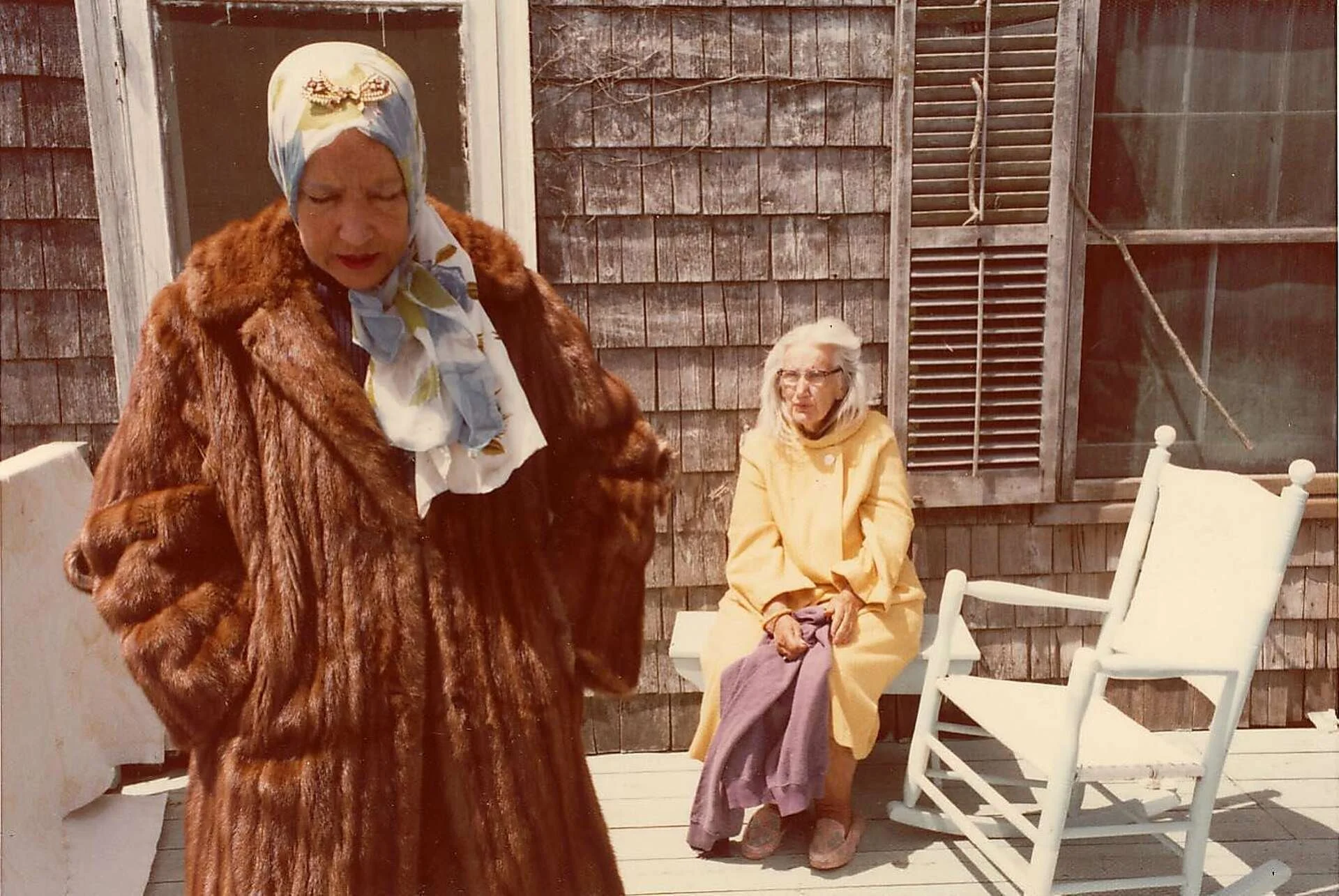
Left to right: Edith Bouvier Beale (Little Edie) and her mother Edith Ewing Bouvier Beale (Big Edie) at Grey Gardens, 1975
At the tail end of last winter, a dear family friend named Briget mailed me a 1950s mink fur coat. Briget is a true estate-sale, church-basement-thrift-store warrior—she managed to find this coat for $30. Fortunately for me, it was not her size. I was, however, devastated that by the time it arrived at my apartment, the season for it had passed. Upon the first day below 50 degrees in New York this fall, I freed her from the confines of a dust bag she had disappointedly been stuffed in back in March. In this jacket, I equally feel like Rita Hayworth and Little Edie. Attempting to embody both the glamorously untouchable leading lady, as well as an endearingly frayed eccentric and once-upon-a-time-star, feels like an honest expression of what glamour is: an escape and a performance, pieced together out of aspiration, desire, and whatever the materials the moment affords. Many of us, Bide’s grandmother, classic Hollywood screen sirens, Little Edie and myself—carry out a similar practice of fashioning our everyday realities, in order to soften the rough edges and uncertainties of our particular moments in time and space.
References
Bide, Bethan. 2017. “Signs of Wear: Encountering Memory in the Worn Materiality of a Museum Fashion Collection.” Fashion Theory Volume 21, no. Issue 4 (February): 449-476. https://www.tandfonline.com/doi/abs/10.1080/1362704X.2017.1290204
Gilbert, David. 2017. “The Looks of Austerity: Fashions for Hard Times.” Fashion Theory Volume 21, no. Issue 4 (May): 477-499. https://www.tandfonline.com/doi/abs/10.1080/1362704X.2017.1316057
La Vine, Robert W. 1980. In a Glamorous Fashion: The Fabulous Years of Hollywood Costume Design. First edition ed. New York, New York: Scribner.
Schiaparelli, Elsa. 2007. Shocking Life. First edition, first printing ed. London, United Kingdom: Victoria & Albert Museum.
Turner, Nan. 2022. Clothing Goes to War: Creativity Inspired by Scarcity in World War II. First edition ed. Bristol, United Kingdom: Intellect Ltd.
