LADY LIBERTY
Text by Hailey Andrews
My mother’s tattoos were the first I could remember registering. They were small miracles to me. At the beach, she would apply a balmy sunscreen stick to my face; I’d tilt toward the piercing whites of the clouded sky. When my eyes drifted downward, I saw her devil, crouched at her hip, winking at me with its halo cocked sideways. Down the slope of her back, there was another tattoo, half moon and half sun, a tribute to my twin sister and I.
My first tattoo came later: a stick and poke along my ribs, executed on the floor of a dormitory by the skilled hand of a friend. Shortly after, I pursued my second tattoo—this time, a line of script enacted by machine, deposited on the skin above my knee. In an immunobiology class I took in college, I learned that the body reads tattooing as a threat.
As the ink penetrates the skin, white blood cells called macrophages swell the area to engulf the pigment and suspend it in the dermis. Unable to metabolize the ink, the macrophages repeatedly purge themselves, allowing the markings to survive. This process has existed across Indigenous cultures for thousands of years.
In spite of its physical tenacity in the body, preserved proof of tattooing is difficult to extract. Archaeological scholars, Jarrett A. Lobell and Eric A. Powell, propound that ancient ceramics can illuminate the varied forms of expression that tattooing of the past took on. Archaeological findings from ancient Egypt suggest women frequently bore ornamental tattoos. The mummy of the priestess Amunet, excavated in 1891, revealed geometric markings spanning her torso and thighs. In Peru, ceramic masks dating back to A.D. 100-300 feature repeating chains of winged figures that resemble motifs later discovered on the tattooed body of the “Lady of Cao,” a Moche woman excavated from northern Peru in 2005. Pottery fragments across the Pacific Islands contain the geometric designs that would later become associated with Polynesian tattoo traditions. It was through British naval officer Captain James Cook’s descriptions of Polynesian tatau in 18th-century Tahitian and Maori societies that the word tattoo eventually entered the English language.
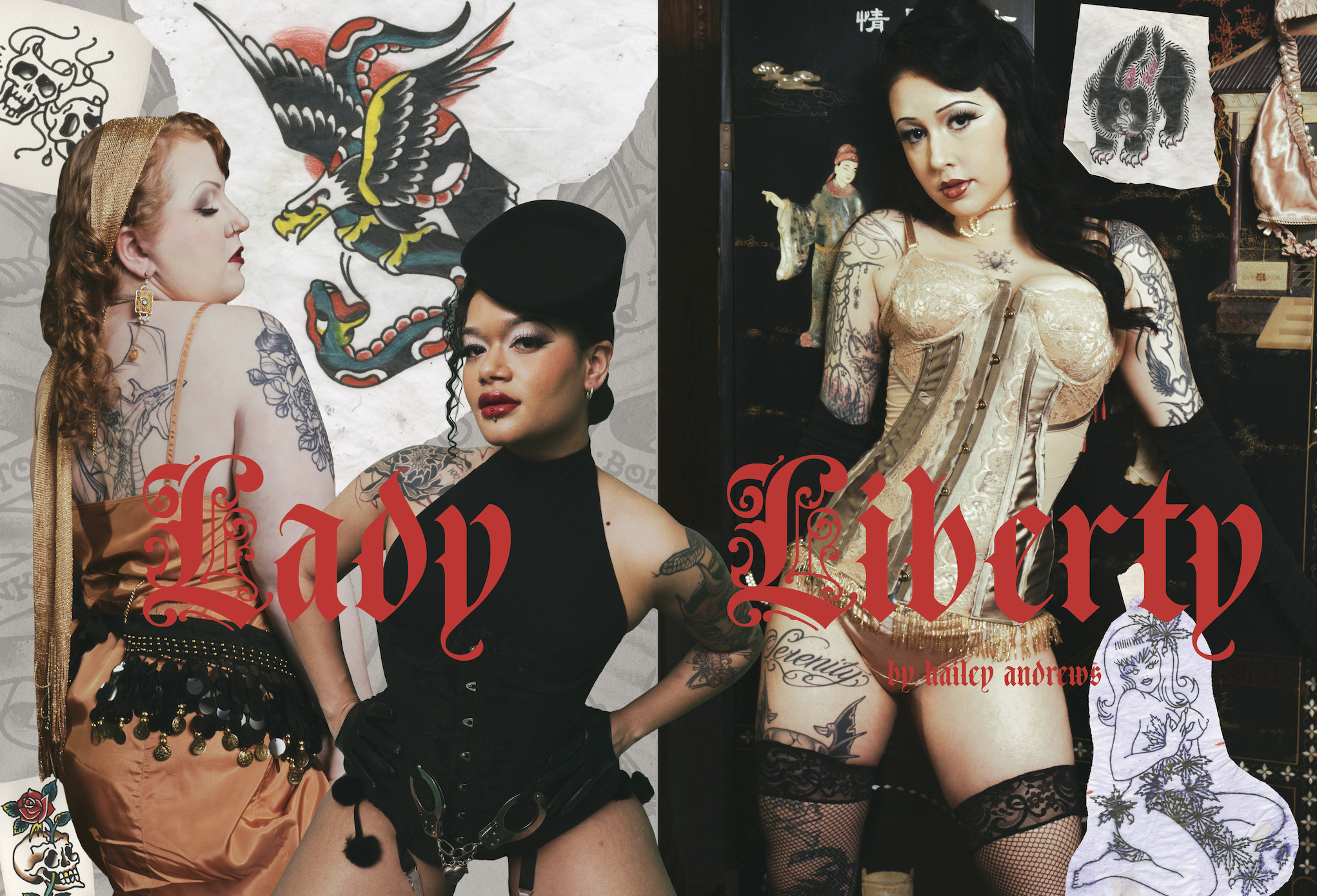
According to Margot Mifflin, author of Bodies of Subversion, the documented history of tattooed women in the Western world begins in large part with Nora Hildebrandt, and the arrival of other heavily tattooed white women to the evolving scene of museum entertainment in 19th-century New York City. By the 1840s, an entertainment industry in the United States had emerged to meet the appetite for novelty and sensational media. When P.T. Barnum opened his American Museum in lower Manhattan, he proffered a new format for spectacle entertainment: the dime museum. Named for its affordable admission fee, the museum exhibited newfangled novelties, performance, and exploitation, showcasing everything from technological curiosities to racist minstrel acts and displays of bodily difference.
Following the catastrophic fire in 1868 that destroyed the American Museum and pushed Barnum into the circus business, George Bunnell, a former assistant of his, emerged as another figure in New York eager to showcase performers.
In 1882, Nora Hildebrandt arrived at Bunnell’s Museum on Bowery with over three hundred tattoos to display. At the time, tattoos in the United States were largely common among soldiers or sailors. Hildebrandt alleged her tattoos had been forcibly applied under the orders of Sitting Bull, a Hunkpapa Lakota leader. In actuality, they had been completed by Martin Hildebrandt, her common-law husband and the owner of one of the first tattoo parlors in the States. Soon after, other tattooed women arrived on the dime museum circuit with similarly fabricated narratives of captivity and coercion.
While such stories had been popular in American culture for decades, the story of Olive Oatman, a white woman who had been captured by an unconfirmed indigenous tribe and traded to the Mohave tribe at fifteen years old, marked a defining moment in the progression of this tattooed archetype. During her approximate five years in community with the Mojave tribe prior to being ransomed by the U.S. Army, Oatman received a chin tattoo facilitated by cactus needles and ink derived from blue stones. Once re-assimilated into the Western world, Oatman repackaged her experience with the Mojave people in a 1857 memoir, providing the template for other white women to generate intrigue with false origin stories around the genesis of their tattoos to make an unusual living.
As American colonial expansion progressed and fantasies around manifest destiny began to fade in relevance, tattooed circus women invented new motivations for becoming tattooed. Romance stories emerging from the 1920s and 1930s cinema made their mark. As Mifflin notes, Lotta Pictoria "publicly lamented her fate as ‘a foolish girl’ who had submitted to getting tattooed ‘out of love for a human fiend with flashing eyes.’”
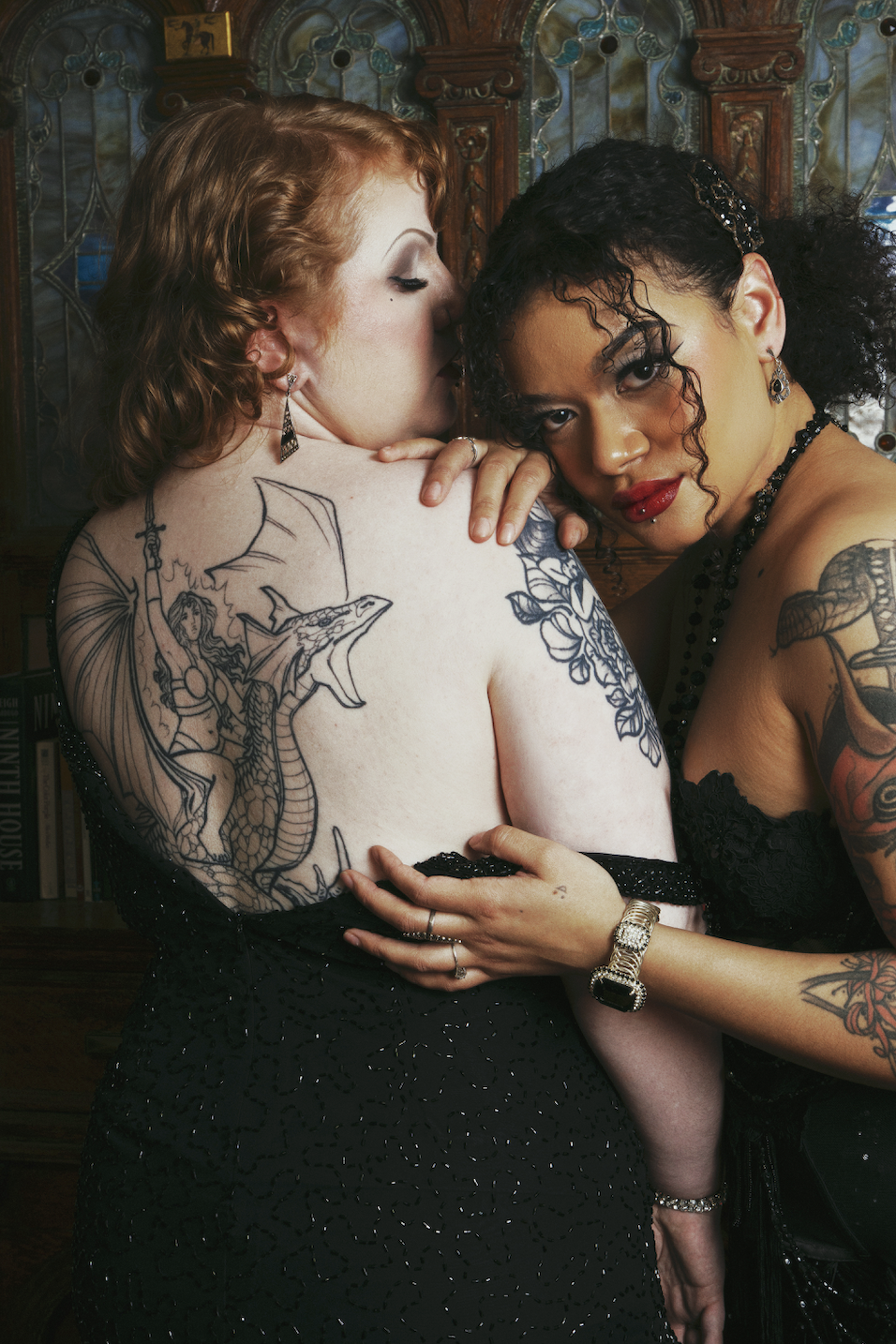
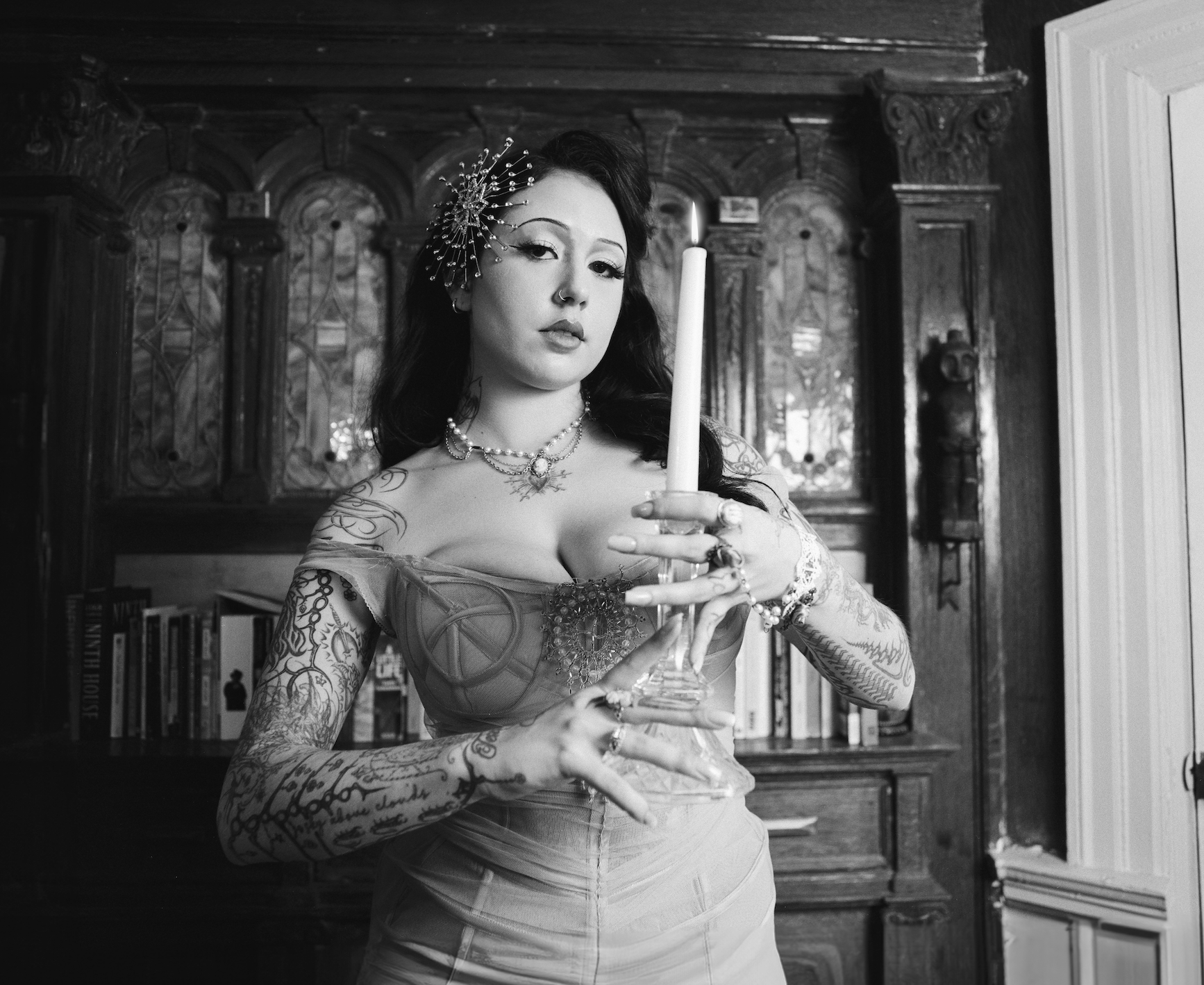
Throughout the Great Depression, public interest in heavily tattooed women waned. Prospective circus performers sought out such appearances to make a living, which oversaturated the marketplace. In addition to losing their appetite for shock, advancements in medicine and shifting attitudes around bodily differences depleted the public’s interest in sideshows and dime museums. By the 1950s and 1960s, concerns about blood-borne illnesses shuttered many tattoo parlors across the country.
What followed was a generative period for tattooing outside the world of side show entertainment. During the countercultural shifts of the 1960s and 1970s, conversations around bodily autonomy naturally diffused into the culture around tattooing. Vyvyn Lazonga, one of the first notable female tattoo artists in the States, began tattooing under an apprenticeship with established tattooist Danny Danzyl in 1972. She eventually opened her own shop in 1979, specializing in tattoos with Japanese influence and Victorian floral motifs.
Tattooists like Jamie “La Palma” Summers approached tattooing with a psychosocial focus, aiming to marry the imagistic desires of her clients with a forfeiture of ego in her art practice. In New York, Ruth Marten initially worked in common modes of American tattooing and abstracted work, and eventually became influenced by Polynesian, Marquesan, and Maori tattoo art. Learning how to tattoo from her former boyfriend, New Orleans-based artist Jacci Gresham emerged as the most well-known Black tattooist in the United States, not encountering other Black tattoo artists until the 1990s.
The increasing number of female tattooists and tattooed women alike enabled a cultural transition in which the livelihood of the tattooed feminine subject was no longer directly tethered to a captivity narrative. Instead, women seized the creative and generative potential of being tattooed to make political and artistic statements that aligned with their personal politics or desires. By the 1980s and 1990s, more varied expressions of tattooing proliferated, though mainstream social attitudes stubbornly clung. Tattoo conventions allowed heavily tattooed individuals to encounter others and meet artists. Although white women had been prominent in subcultures of feminist body art from the 1960s onward, women of color experienced less visibility. Until her death in the early 1990s, collector Laura Lee was known for being the most heavily tattooed Black woman in the world of conventions, often gravitating towards imagery depicting aspects of the Black American experience. Lee had two portraits of Malcolm X, as well as an expansive number of skull tattoos, serving as memorials for Africans who had died after being forced into enslavement.



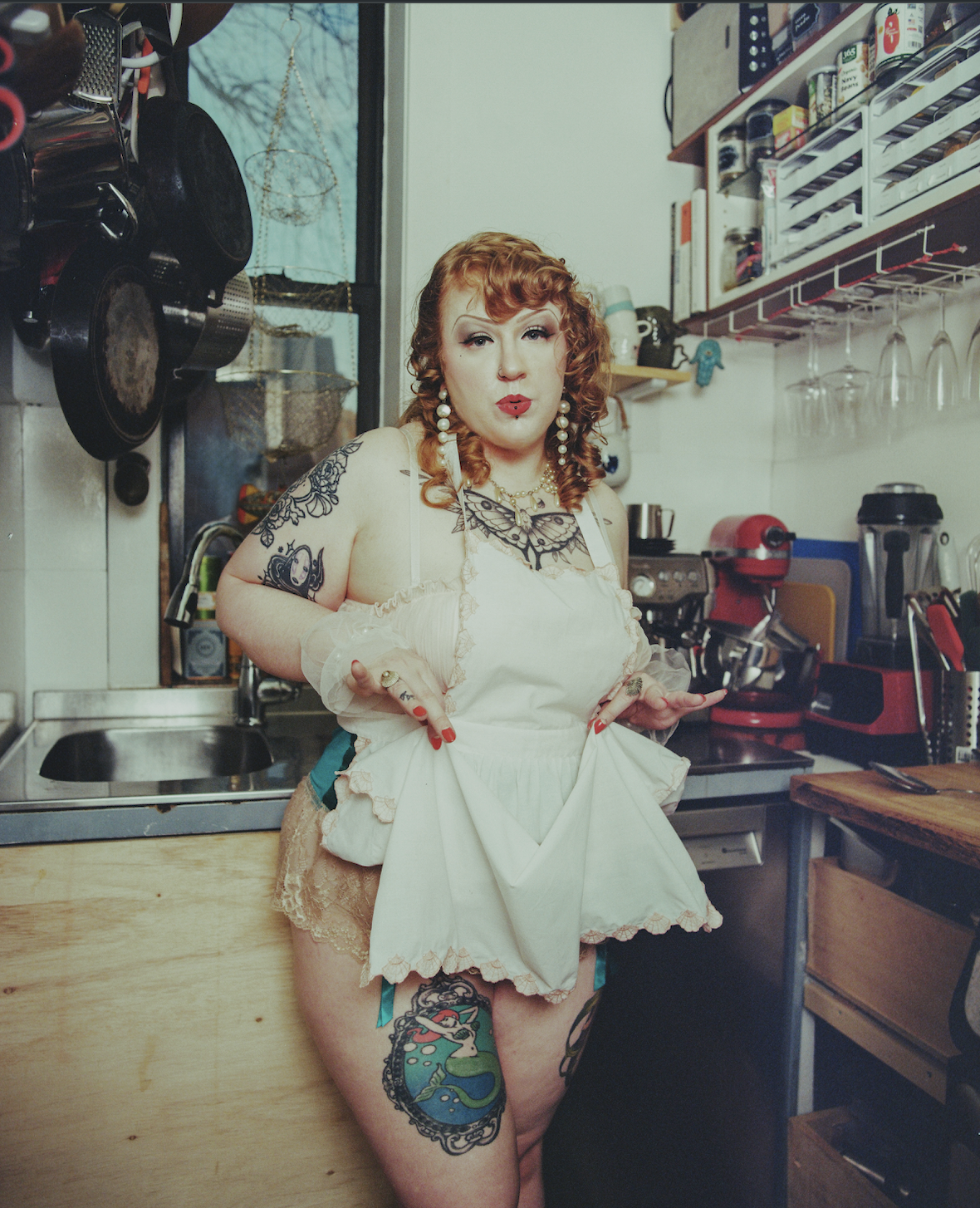
Scholarship by assistant professor Christine Braunberger notes the political aims of certain women artists like Diamandas Galás and Valie Export, who respectively tattooed “H-I-V-+” across her knuckles to commemorate the life of her late brother and call attention to the state of the AIDS crisis, and tattooed garter belt clips on her body to remark on the “obsolete” function of such a sartorial symbol to “modern” women.
In ruminating on the political thrust of a garter belt tattoo, meant to critique antiquated conventions around femininity, I’m reminded of a text exchange I had with my mom, where she had attached photos of a pair of tattooed stockings spanning the length of the legs for my review. Although I’m aware my mother is particularly progressive regarding body modifications, perhaps compared to others, the general consensus around tattooing has shifted considerably. In 2023, the Pew Research Center found that 32% of Americans have at least one tattoo, and 66% of untattooed adults remarked that “seeing a tattoo on someone else leaves them with neither a positive nor negative impression of that person.” Additionally, 38% of women surveyed have at least one tattoo, compared to 27% of men.
I had tormented myself for years over what would become my first tattoo in a collection of many, to the point where I felt delayed in my own self-prescribed timeline (I was 21). Since coming out, imagining myself tattooed felt like a natural externalization of my identification with lesbianism. Though specific research on queer women is more limited, Pew’s 2023 findings reveal that half of queer (lesbian, gay, or bisexual) Americans bear at least one tattoo. Among women, the percentage grows higher, with 68% being tattooed, compared to only 31% of straight Americans.
Historically, tattoos have functioned as covert signals within queer communities. In the 1940s and 1950s, many lesbians began donning a nautical star tattoo on the inner wrist, covering them during the day with watches and revealing them selectively in nightlife spaces. Symbols like violets and the labrys emerged with lasting popularity, although the most common thread I notice in my encounters with other queer women is, beyond specifics, a general inclination towards being tattooed.
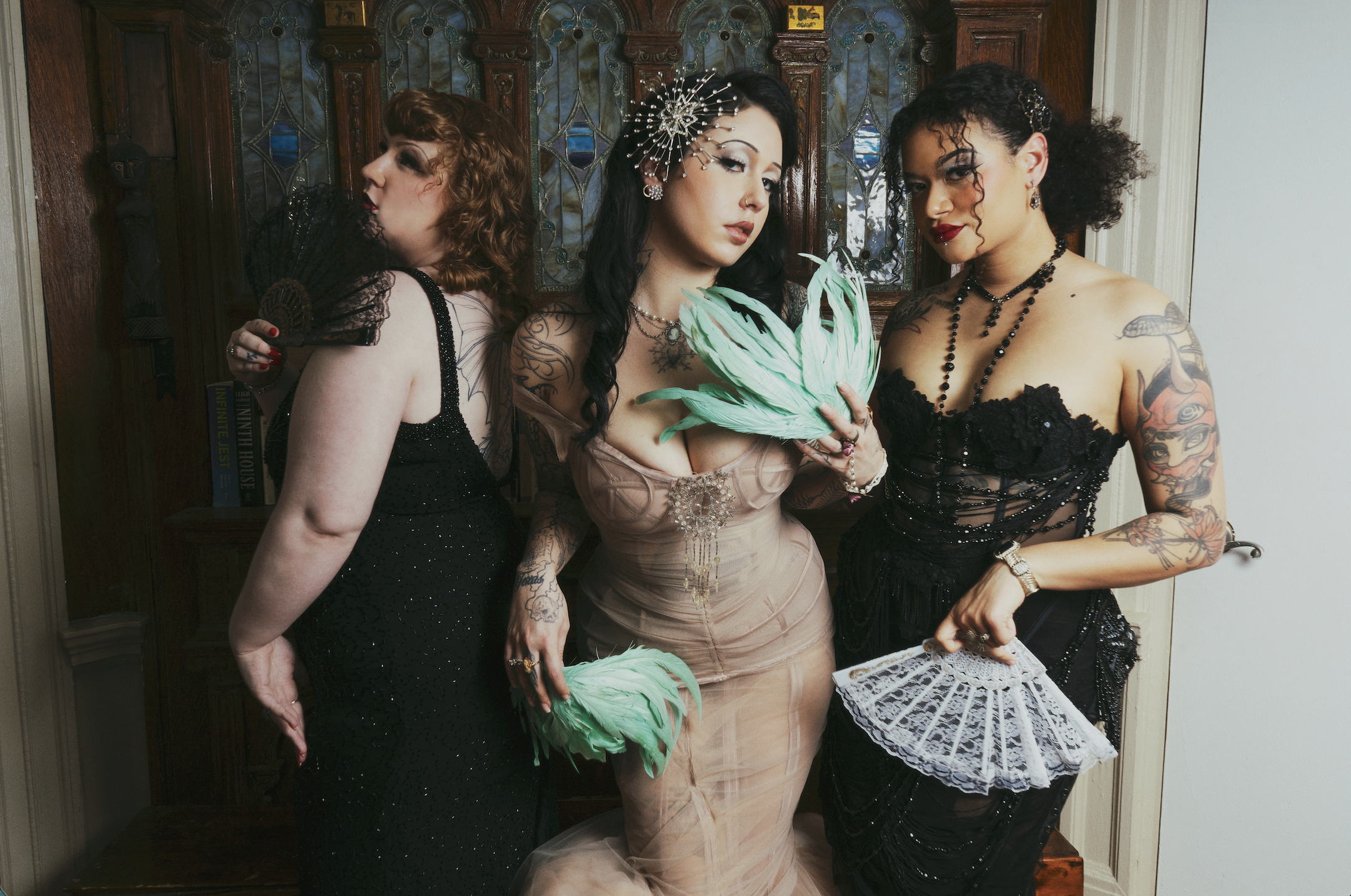
Talent: @annabelle.abel, @bridauria, @gingerfroggy,
Creative Director: @maya.davila
Photographer: @beyoncerosee
Photo Assistants: @pepperlovve, @melihnda
Stylists: @oriana_aponte_, @shelbyleeming / @byshelbyleeming
Makeup Artist: @g.shi_7
Hair Artists: @shelbyleeming, Talent
Production Assistant: @sammmystrawberry
Writer: @haileycamryn
Graphic Designer: @maya.davila
Tattoo Artwork by: @yuka_tftd
Still, the root of that desire remains difficult to pin down. The genesis of my mother’s first tattoo originated in a Chili’s with her best friend over drinks. They discussed wanting to get a matching tattoo: a martini glass, half cocked with olives. Dissatisfied with the initial sketches by their artist at a nearby tattoo parlor, they chose a flash piece: one devil with a halo directly over the head, and the other circling the horns. When I ask my mother about her motivations to become tattooed, she doesn’t recall one, but rather embracing the moment that fortified the bonds of their friendship.
In her essay “Revolting Bodies: The Monster Beauty of Tattooed Women,” Braunberger remarks that the earlier years of exploration with tattoos among women working in the circus circuit encompassed toying with the limits of respectability, rather than a complete forfeiture afforded to them by modesty. As tattooing became less culturally extreme, increased visibility allowed for more aesthetic challenges to the zeitgeist of beauty, and allowed for the language of tattooing to extend beyond pure spectacle into the realm of connection.
The epicenter of intrigue, especially for women, remains varied. For some, the decision to become tattooed is made on a whim, and for others, the choice is mulled over for years. Ultimately, tattooing’s most significant impact in the lives of women is the personal potential for transformation that occurs in the process of modifying the body, and how those images in the skin can translate desire into action and physical language. No longer does the quality of being tattooed relegate women strictly to symbols of empire, but instead function politically, aesthetically, and communally to commemorate a moment where one acted with vulnerability and grit to reveal something about themselves.
Reading List
Christine Braunberger. “Revolting Bodies: The Monster Beauty of Tattooed Women.” NWSA Journal, vol. 12, no. 2, 2000, pp. 1–23. JSTOR, http://www.jstor.org/stable/4316734. Accessed 9 Jan. 2026.
Bodies of Subversion: A Secret History of Women and Tattoo by Margot Mifflin
Bailkin, Jordanna. “Making Faces: Tattooed Women and Colonial Regimes.” History Workshop Journal, no. 59, 2005, pp. 33–56. JSTOR, http://www.jstor.org/stable/25472784. Accessed 9 Jan. 2026.
Craighead, Clare. “(Monstrous) Beauty (Myths): The Commodification of Women’s Bodies and the Potential for Tattooed Subversions.” Agenda: Empowering Women for Gender Equity, vol. 25, no. 4 (90), 2011, pp. 42–49. JSTOR, http://www.jstor.org/stable/23287201. Accessed 9 Jan. 2026.
Amelia Klem. “A Life of Her Own Choosing: Anna Gibbons’ Fifty Years as a Tattooed Lady.” The Wisconsin Magazine of History, vol. 89, no. 3, 2006, pp. 28–39. JSTOR, http://www.jstor.org/stable/4637178. Accessed 9 Jan. 2026.
Lobell, Jarrett A., and Eric A. Powell. “ANCIENT TATTOOS.” Archaeology, vol. 66, no. 6, 2013, pp. 41–46. JSTOR, http://www.jstor.org/stable/24363768. Accessed 9 Jan. 2026.
Schildkrout, Enid. “Inscribing the Body.” Annual Review of Anthropology, vol. 33, 2004, pp. 319–44. JSTOR, http://www.jstor.org/stable/25064856. Accessed 9 Jan. 2026.
Stringer, Katie. “The Legacy of Dime Museums and the Freakshow: How the Past Impacts the Present.” History News, vol. 68, no. 4, 2013, pp. 13–18. JSTOR, http://www.jstor.org/stable/43503073. Accessed 9 Jan. 2026.
